
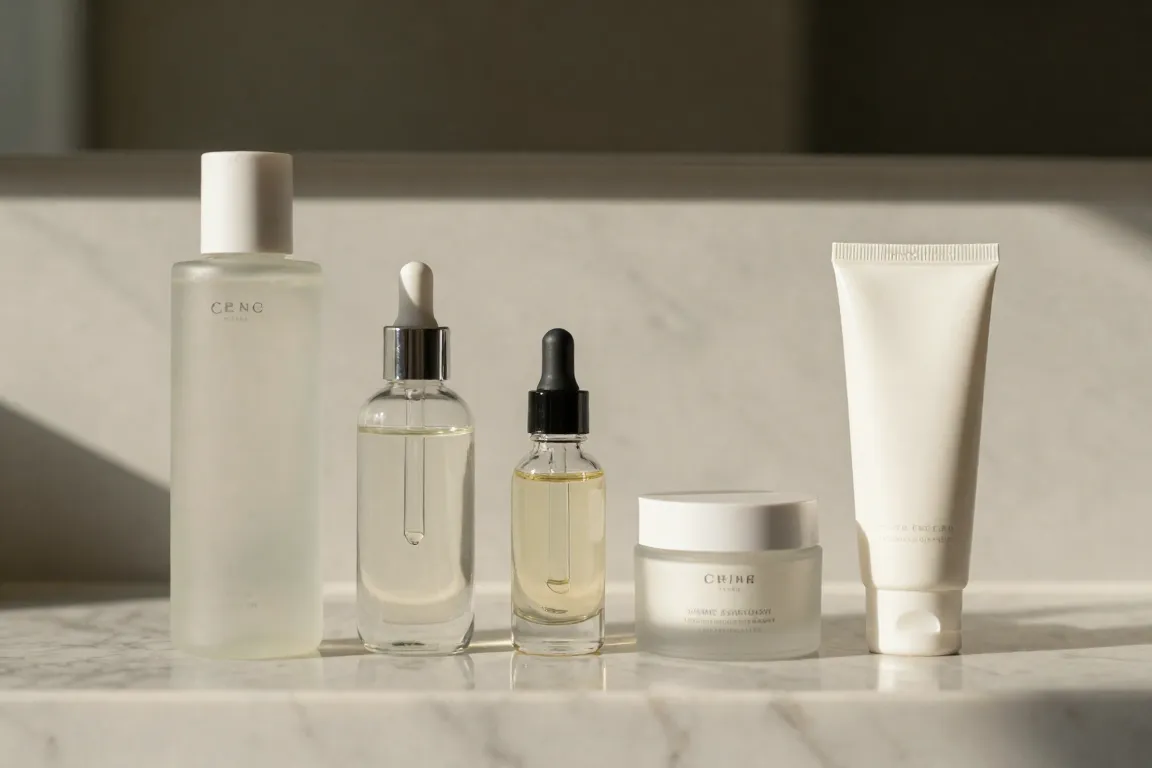
I spent six months testing different skincare layering sequences on my own face, and I can tell you this: applying products in the right order makes a bigger difference than swapping which products you use. The correct order to apply skincare products follows one simple principle: layer from thinnest to thickest consistency, starting with cleansers and ending with sunscreen in the morning or rich moisturizers at night.
That sentence right there is the foundation everything else in this guide builds on. Whether you are assembling your first three-product routine or fine-tuning a ten-step Korean-inspired regimen, the layering logic stays the same. Light, water-based formulas go on first so their active ingredients can reach your skin. Heavier creams and oils come last to lock everything in.
In this guide, our team breaks down every step of both a morning and night skincare routine, explains why the order matters at a scientific level, covers ingredient conflicts most articles skip, and addresses the questions real users on skincare forums ask over and over again. We also cover the thinnest-to-thickest rule, the 4-2-4 cleansing method, wait times between products, and how to customize everything for your skin type.
Quick Summary: The Correct Skincare Routine Order at a Glance
If you only remember one thing from this article, make it this: light products first, heavy products last. Here is the correct order to apply skincare products, condensed into two quick-reference lists you can screenshot.
Morning (AM) routine order:
1. Cleanser (gentle, water-based)
2. Toner or essence
3. Antioxidant serum (such as vitamin C)
4. Eye cream
5. Moisturizer
6. Sunscreen (always last, always non-negotiable)
Night (PM) routine order:
1. Oil-based cleanser (first cleanse, melts makeup and SPF)
2. Water-based cleanser (second cleanse, the double-cleanse method)
3. Toner
4. Treatment serum, retinol, or exfoliating acid
5. Eye cream
6. Night moisturizer, face oil, or sleeping mask
The AM routine is about protection against UV and environmental damage. The PM routine is about repair and renewal while you sleep. Same layering principle, different goals.
Why Skincare Order Matters More Than You Think
Think of your skin like a sponge. If you pour thick cream on a dry sponge first, the surface gets coated and nothing else can soak through. But if you start with water, everything absorbs properly. Your skin barrier works the same way.
Heavy products like moisturizers, face oils, and occlusive creams form a physical seal over your skin. They contain larger molecules and ingredients like ceramides, shea butter, and petrolatum that sit on the surface. When you apply a lightweight serum after a heavy cream, that serum hits the seal and slides right off. You might as well not apply it at all.
Dermatologists consistently emphasize this point because it is the number-one reason people see no results from expensive serums. Users on the SkincareAddiction forum describe this exact frustration. They invest in a vitamin C serum, layer it over a heavy moisturizer, see zero brightening effect after eight weeks, and blame the product. The product was fine. The order was wrong.
Wrong layering can also cause breakouts. When oil-based products trap water-based products underneath, the trapped ingredients can clog pores and interfere with natural cell turnover. Getting the sequence right is not just about efficacy, it is about avoiding the breakouts that come from sloppy layering.
Morning Skincare Routine Step-by-Step
Your morning routine should be short, focused, and built around one goal: protecting your skin from the day ahead. Here is every step in the correct order, with the reasoning behind each placement.
Step 1: Cleanser (Gentle Morning Wash)
Start with a gentle, water-based cleanser even if you washed your face the night before. Overnight, your skin produces sebum, sweat, and dead skin cells that need to come off before any other product goes on. A pH-balanced cleanser (around 5.5) removes this buildup without stripping your moisture barrier.
Skip harsh foaming cleansers in the morning. They strip natural oils and leave your skin tight, which actually triggers more oil production by midday. A cream, gel, or micellar cleanser is ideal for most skin types.
If you have very dry or sensitive skin, you can rinse with lukewarm water alone on some mornings. Listen to what your skin tells you rather than forcing a step it does not need.
Step 2: Toner or Essence
Toner has evolved far beyond the astringent, alcohol-drenched formulas of the 1990s. Modern toners are lightweight, water-based liquids that restore your skin’s pH after cleansing, add a layer of hydration, and prepare your skin to absorb everything that follows.
Apply toner to slightly damp skin using your hands, not a cotton pad. Pressing it in with clean palms avoids wasting product on a pad and helps the humectants in the toner pull moisture into your skin. If your toner contains exfoliating acids like glycolic or salicylic acid, this is the only acid step in your morning routine.
An essence is similar to a toner but slightly thicker and more concentrated in hydrating ingredients. If you use both, toner goes first, then essence.
Step 3: Antioxidant Serum (Vitamin C)
This is where your morning routine earns its keep. A vitamin C serum (specifically L-ascorbic acid at 10-20% concentration) provides antioxidant protection against free radicals from UV and pollution. Think of it as backup defense for your sunscreen.
Serums go on before moisturizer because they are thin, fast-absorbing, and designed to deliver active ingredients deep into the skin. Apply a few drops to clean fingertips and press gently over your face and neck. Wait about 30-60 seconds for it to absorb before moving on.
Vitamin C is not the only morning serum option. Niacinamide, hyaluronic acid, and peptide serums also work well in this slot. Just keep serums lighter than whatever comes next.
Step 4: Eye Cream
The skin around your eyes is thinner and more delicate than the rest of your face, so it benefits from targeted hydration. Apply a pea-sized amount of eye cream using your ring finger, tapping gently along the orbital bone. Never tug or rub.
Eye cream placement is debated, but most dermatologists agree it should go after serums and before your full-face moisturizer. This lets the targeted ingredients reach the undereye area without being blocked by a heavier face cream.
Step 5: Moisturizer
Even if you have oily skin, you need moisturizer. It seals in all the water-based products you just applied and keeps your skin barrier functioning properly. A moisturizer with humectants like glycerin and hyaluronic acid draws moisture in, while emollients and ceramides smooth and reinforce the barrier.
Choose a gel or gel-cream formula for oily and combination skin. Dry skin types benefit from richer cream formulas. Apply moisturizer in upward strokes over your entire face and neck.
If you use a face oil in the morning, it goes after moisturizer, not before. Oil and water do not mix, so oil always comes last in any layering sequence.
Step 6: Sunscreen (Always Last in AM)
Sunscreen is the final step of your morning routine, every single morning, regardless of weather, season, or whether you plan to leave the house. UV rays penetrate windows and clouds. SPF 30 or higher is the minimum recommendation from dermatologists.
Sunscreen must go last because it needs to form an uninterrupted protective film on your skin. If you layer anything over it, you dilute that film and create gaps in coverage. Chemical sunscreens absorb UV rays, while physical (mineral) sunscreens containing zinc oxide or titanium dioxide reflect them. Both work, but mineral sunscreens sit more visibly on the skin.
Apply about a quarter teaspoon for your face and another quarter teaspoon for your neck. Reapply every two hours if you are in direct sun. No exceptions.
Night Skincare Routine Step-by-Step
Your night routine is where the real repair work happens. While you sleep, your skin goes into cell-turnover mode, making it the ideal time for active ingredients like retinol, exfoliating acids, and rich moisturizers. Here is the correct order.
Step 1: Oil-Based Cleanser (First Cleanse)
The first cleanse of your night routine dissolves everything oil-based on your skin: sunscreen, makeup, sebum, and pollution particles. A cleansing balm, cleansing oil, or micellar water breaks these down so your second cleanser can actually reach your skin.
This is the foundation of the double-cleanse method, a staple of Korean and Japanese skincare routines that forum users on r/AsianBeauty have popularized worldwide. Massaging an oil cleanser into dry skin for 60 seconds melts away even stubborn SPF without aggressive scrubbing.
Step 2: Water-Based Cleanser (Second Cleanse)
Now follow with a water-based cleanser to remove any remaining residue, sweat, and water-soluble debris. This second step ensures your skin is truly clean so that treatment products can penetrate effectively.
Many people skip the double cleanse and wonder why their serums are not working. A single cleanser often cannot fully remove sunscreen and oil-based impurities. That leftover film acts as a barrier between your skin and your active ingredients.
If you did not wear sunscreen or makeup that day, a single cleanse is fine. The double-cleanse method is specifically for days when you have products to remove.
Step 3: Toner
Just like in the morning, toner rebalances your skin’s pH after cleansing and adds a hydrating base layer. At night, you might choose a hydrating toner over an exfoliating one, especially if you plan to use retinol or an acid treatment in the next step.
Press it into damp skin with clean hands. This is also where many people apply hydrating essences or lightweight hyaluronic acid serums, which need water to function properly as humectants.
Step 4: Treatment Serum or Retinol
This step changes everything. Night is when you apply active treatments that make skin do its repair work. Retinol (a vitamin A derivative) speeds cell turnover and boosts collagen. Exfoliating acids like glycolic, lactic, and salicylic acid dissolve dead skin cells and clear pores.
Do not layer retinol and acids in the same routine. They conflict. Use acids one night and retinol the next, or split them between morning (acids with caution) and evening. We cover this in detail in the ingredient conflicts section below.
Apply retinol to completely dry skin. Wet skin increases penetration too fast and causes irritation. A pea-sized amount covers your entire face. Follow the retinol with a moisturizer to buffer it if you are new to the ingredient.
Step 5: Eye Cream
Apply your nighttime eye cream after treatment serums but before your full-face moisturizer. If your eye cream contains active ingredients like peptides or retinol, it acts as a targeted treatment for fine lines and dark circles in this delicate area.
Use your ring finger and tap gently along the orbital bone. The same rule applies morning and night: no tugging.
Step 6: Night Moisturizer or Sleeping Mask
Your night moisturizer can be richer than your daytime one because you do not need to worry about sunscreen sitting on top. Look for formulas with ceramides, peptides, and nourishing oils that support overnight repair.
A sleeping mask is an optional final layer popular in K-beauty routines. It is an occlusive seal that prevents transepidermal water loss while you sleep. If your skin is dry or you sleep in a climate-controlled room, a sleeping mask makes a noticeable difference by morning.
Face oils, if you use them, go absolutely last. They seal in everything underneath. Nothing penetrates through an oil layer.
The Thinnest-to-Thickest Layering Principle
If you internalize one concept from this entire guide, make it the thinnest-to-thickest rule. Every skincare product has a viscosity, or thickness. The principle is simple: products with a thinner, more watery consistency go on first. Thicker, creamier, oilier products go last.
Here is a rough viscosity ranking from thinnest to thickest:
Toner (water-thin) then essence (slightly viscous) then serum (light gel) then lotion (light cream) then cream (thick) then balm or ointment (semi-solid) then face oil (lipid-based).
The science behind this is straightforward. Thin, water-based products contain small molecules designed to penetrate the skin. Thick, oil-based products contain large molecules that form an occlusive barrier on the surface. If you reverse the order, the thick layer blocks the thin layer from ever reaching your skin.
There are a few exceptions. Patch tests, spot treatments for acne, and certain prescription topicals may have specific placement rules from your dermatologist. When in doubt, ask. But for over-the-counter products, the thinnest-to-thickest rule covers 95% of situations.
One helpful mental model from forum users: if a product would slide off a tilted plate, it goes early in your routine. If it would stay put, it goes late.
Ingredient Conflicts: What Not to Layer Together
Applying products in the right order is half the battle. The other half is making sure the ingredients in those products can coexist. Some active ingredients cancel each other out, cause irritation, or even trigger chemical reactions on your skin.
Retinol and Vitamin C
These two powerhouse ingredients work at different pH levels. Vitamin C (L-ascorbic acid) needs an acidic environment to function, around pH 3.5 or lower. Retinol needs a more neutral pH to convert properly on your skin. Layering them together destabilizes both and can cause redness and peeling.
The fix: vitamin C in the morning, retinol at night. This is the most common split recommended by dermatologists and is echoed by countless users on skincare forums.
AHAs or BHAs and Retinol
Exfoliating acids (glycolic, lactic, salicylic) and retinol both increase cell turnover. Using them in the same session over-exfoliates your skin, leading to barrier damage, stinging, and breakouts. Alternate them on different nights instead.
Benzoyl Peroxide and Retinol
Benzoyl peroxide oxidizes retinol, rendering it ineffective before it can absorb. If you use both for acne, apply benzoyl peroxide in the morning and retinol at night, or use benzoyl peroxide one night and retinol the next.
Safe Combinations
Good news: many ingredients play well together. Niacinamide pairs with almost anything. Hyaluronic acid works under any moisturizer or serum. Ceramides and peptides layer safely with most actives. When in doubt, stick to one active ingredient per routine.
Wait Times Between Skincare Steps
One of the biggest content gaps we found across competitors is the question of wait times. How long should you wait between applying products? The answer depends on what you just applied.
Water-based products (toners, hydrating serums, essences): wait 30-60 seconds. They absorb quickly, and applying the next product to slightly damp skin can actually help hydration.
Vitamin C serum: wait 60 seconds to one minute. This lets the pH drop and the ascorbic acid begin absorbing before you layer anything on top.
Retinol: wait 10-15 minutes after cleansing before applying. Your skin must be completely dry. After applying retinol, wait another 5-10 minutes before moisturizing so it absorbs fully.
Exfoliating acids: wait 2-3 minutes before layering anything else. Acids need time to lower your skin’s pH and do their exfoliating work.
If that sounds like a lot of waiting, keep this in perspective: a well-structured routine takes about 5-7 minutes of active application. The wait times fit naturally into the gaps between brushing your teeth, getting dressed, or making coffee.
Skin Type Customization Guide
The correct order stays the same regardless of skin type. What changes is which products you include and how heavy each layer is. Here is how to adapt the routine for your specific needs.
Oily and Acne-Prone Skin
Oily skin still needs moisture, but you can use lighter, water-based formulations throughout. Replace heavy creams with gel moisturizers. Use salicylic acid (BHA) to keep pores clear. Avoid face oils entirely. Double cleansing at night is especially important because excess sebum mixes with sunscreen and makeup to clog pores.
Dry and Dehydrated Skin
Layer hydration at every step. Use a hydrating toner, a hyaluronic acid serum applied to damp skin, a richer cream moisturizer, and finish with a facial oil or sleeping mask at night. Look for ceramides and glycerin in your formulas. Avoid over-cleansing; a cream cleanser is gentler than a foaming one.
Sensitive Skin
Sensitive skin requires the most caution with actives. Introduce one new product at a time, patch test for 48 hours, and never combine exfoliating acids with retinol in the same routine. Look for fragrance-free, alcohol-free formulas with soothing ingredients like centella asiatica, panthenol, and oat extract. Start with a low concentration of any active and build up gradually.
Combination Skin
Combination skin benefits from different products in different zones. Use a gel moisturizer on the T-zone and a cream on the cheeks, or apply a lighter formula all over and spot-treat dry areas with a richer cream. This is called skin cycling and it lets you address both oily and dry concerns without overloading either.
The 4-2-4 Rule Explained
You may have seen the 4-2-4 rule mentioned in skincare discussions and wondered what it means. It is a Japanese cleansing method, not a layering rule for your entire routine. The numbers refer to massage time in minutes.
4 minutes of massaging an oil-based cleanser into dry skin. This breaks down sunscreen, makeup, sebum, and oil-based impurities. Take your time and really work the product in with circular motions.
2 minutes of massaging a cream or water-based cleanser on damp skin. This removes water-soluble debris, sweat, and any remaining residue from the oil cleanse.
4 minutes of rinsing with lukewarm water. This thorough rinse ensures every trace of cleanser is gone, leaving your skin perfectly clean and prepped for the rest of your routine.
The full 4-2-4 method takes ten minutes, which is more commitment than most people want for daily cleansing. Many skincare enthusiasts reserve it for a once-weekly deep-clean ritual and use a standard double cleanse on other nights. Either way, the underlying principle, oil first then water-based, is the correct approach every time.
Common Skincare Layering Mistakes to Avoid
After reading forum discussions and analyzing competitor content, these are the five most common mistakes people make when layering skincare products.
Mistake 1: Sunscreen before moisturizer. Sunscreen must always be the last step. Anything layered over it disrupts the protective film. If you need to reapply moisturizer midday, reapply sunscreen too.
Mistake 2: Heavy cream before serum. This blocks the serum from absorbing. Serums always go before moisturizers. If your serum feels greasy, it may be an oil-based serum that belongs later in the routine.
Mistake 3: Mixing incompatible actives in one session. Retinol plus vitamin C, or retinol plus AHAs, will irritate your skin and cancel out the benefits. Split conflicting actives between AM and PM or alternate nights.
Mistake 4: No wait time between products. Layering product after product without giving each time to absorb can cause pilling (those little balls of product that roll off your skin) and reduce efficacy. A few seconds between steps makes a big difference.
Mistake 5: Over-exfoliating. Using a physical scrub, a chemical exfoliant, and a retinol all in the same routine damages your skin barrier. Limit exfoliation to 2-3 times per week maximum, and never combine multiple exfoliating methods in one session.
Skincare Routine Order FAQs
What is the ideal order for my morning and night skincare routine?
The ideal morning skincare order is cleanser, toner, antioxidant serum, eye cream, moisturizer, and sunscreen. The ideal night skincare order is oil cleanser, water-based cleanser, toner, treatment serum or retinol, eye cream, and night moisturizer. Always layer from thinnest to thickest consistency.
What is the 4-2-4 rule in skincare?
The 4-2-4 rule is a Japanese cleansing method: 4 minutes massaging an oil-based cleanser into dry skin, 2 minutes massaging a water-based cleanser on damp skin, and 4 minutes rinsing with lukewarm water. It is a thorough double-cleanse technique, not a layering rule for the rest of your routine.
What are the 7 steps of skincare?
The 7 basic steps of a skincare routine are cleanser, toner, serum, eye cream, moisturizer, sunscreen (AM only), and a treatment product like retinol or exfoliating acid (PM only). Not every routine needs all 7 steps. Beginners can start with cleanser, moisturizer, and sunscreen.
What is the 3 basic skincare routine?
The 3 basic skincare products everyone needs are a cleanser, a moisturizer, and a sunscreen. Cleanse twice daily to remove dirt and oil, moisturize to maintain the skin barrier, and apply sunscreen every morning to protect against UV damage. This minimal routine covers cleansing, hydration, and protection.
Can I use retinol and vitamin C together?
No, retinol and vitamin C should not be used in the same routine. They operate at different pH levels and can destabilize each other, causing irritation. The standard recommendation is vitamin C in the morning and retinol at night.
Conclusion: Start Simple, Stay Consistent
The correct order to apply skincare products comes down to one principle: thinnest to thickest, every time. Start with cleansing, layer your water-based serums and toners, seal everything with moisturizer, and always finish with sunscreen in the morning. At night, swap sunscreen for treatment actives and richer creams that support overnight repair.
If you are new to skincare, do not try to build a ten-step routine on day one. Start with a cleanser, moisturizer, and sunscreen. Master that for a month, then add one product at a time. Consistency beats complexity every time, and your skin barrier will thank you for not overwhelming it.
Bookmark this guide, screenshot the quick-summary lists, and check back as you build your routine. The 2026 skincare landscape evolves, but the layering principle never changes.