
I learned the hard way that an oxidized vitamin C serum is more than a waste of money. After squeezing the last drop from a bottle that looked “a little off” and ended up with red, itchy skin for a week, I started paying close attention to every bottle on my shelf. If you want to know how to tell if your vitamin C serum has oxidized before it wrecks your routine, this guide walks you through exactly what to look for, when to toss it, and how to keep your next bottle potent for months.
Our team has spent years testing serums and tracking how fast they degrade in real bathrooms, not climate-controlled labs. We have seen fresh serums turn dark orange in under a week and sealed bottles stay stable for a year. This article is what we wish someone had told us on day one: the clear visual signs, the smell clues, the texture red flags, and the storage habits that actually make a difference.
What Is Oxidized Vitamin C Serum? (And Why It Happens?)
Oxidized vitamin C serum is what happens when the active ingredient, called L-ascorbic acid, has been exposed to air, light, or heat and chemically changed into a less effective form. The vitamin C molecule literally loses electrons to oxygen, and that reaction is what shifts the color and strips away the antioxidant power you paid for.
L-ascorbic acid is one of the most unstable ingredients in skincare. Chemists love it because it works brilliantly on skin, but it also reacts the moment it meets oxygen in the air. That is why brands spend so much on airless pumps, opaque bottles, and supporting antioxidants like vitamin E and ferulic acid. When the formula is well-protected, oxidation is slow. When the seal breaks or the bottle sits on a sunny counter, oxidation speeds up dramatically.
The reason this matters for your skin is that an oxidized serum does the opposite of what you want. Fresh vitamin C donates electrons to neutralize free radicals, protecting collagen and fading dark spots. Oxidized vitamin C is depleted, meaning it can no longer shield your skin from oxidative stress. In some cases, using a heavily oxidized serum can introduce new free radicals and trigger irritation, especially if you have sensitive skin or a damaged barrier.
Visual Signs of Oxidation: A Color and Texture Guide
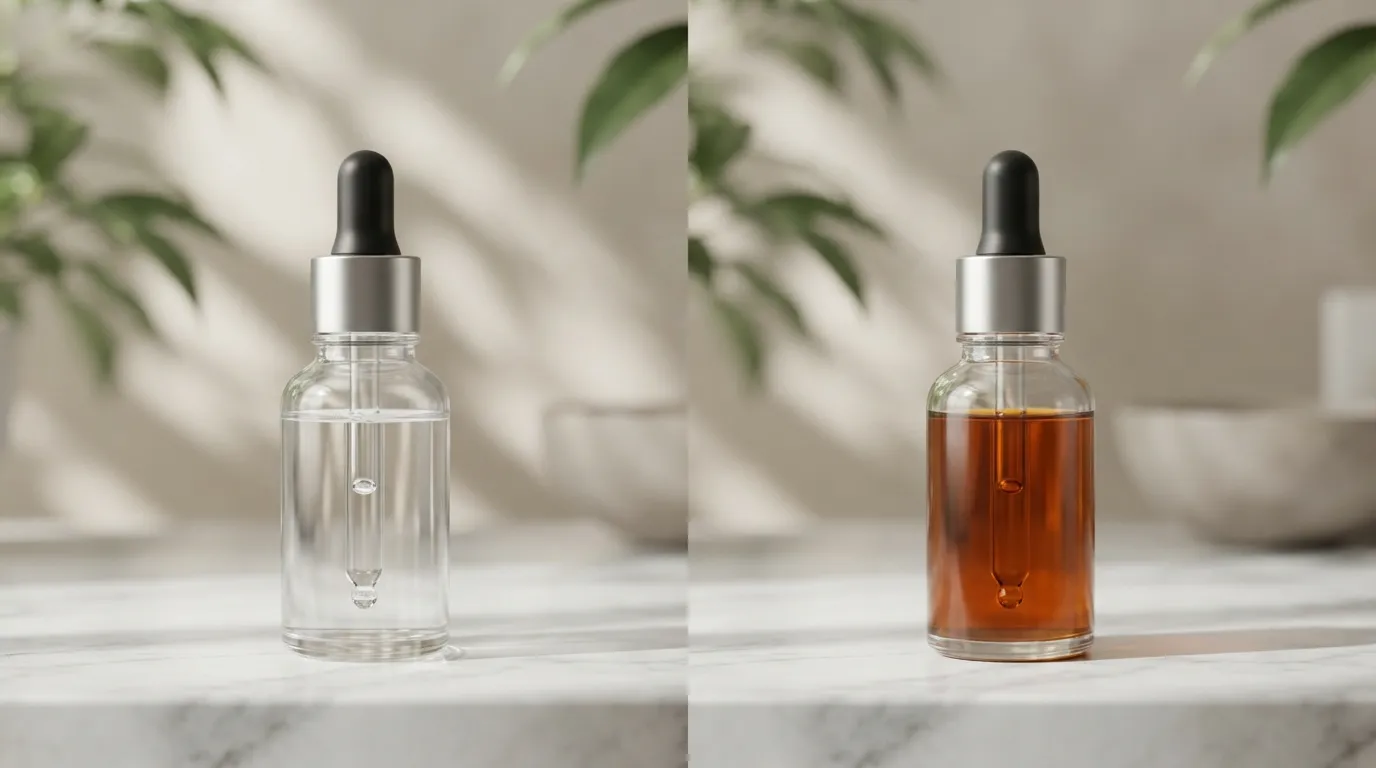
The fastest way to spot oxidation is to look at the color. Vitamin C serum goes through a predictable color journey as it ages, and learning the stages takes about 30 seconds. Here is the spectrum from fresh to fully degraded:
- Clear or pale straw: Fresh, just opened, fully potent. Most L-ascorbic acid serums start with a slight tint, not pure water-clear.
- Light yellow to gold: Early oxidation. The serum is still usable but starting to lose strength. Use it up soon.
- Amber or dark yellow: Moderate oxidation. Noticeable color shift, usually with a metallic or sour smell.
- Orange: Heavy oxidation. The serum has lost most of its active vitamin C. Time to replace it.
- Dark orange to brown: Fully oxidized. The serum is essentially useless and may irritate skin.
Texture tells a parallel story. A fresh serum is thin, water-like, and absorbs quickly. An oxidized serum often turns cloudy, syrupy, or separates into layers. If you see crystals forming on the dropper or chunks floating in the bottle, that is a clear sign the formula has broken down.
One quick trick I use is to hold the bottle up to a white background, like a piece of printer paper. The color shift becomes obvious against white, even when it looks subtle against the bathroom tile. Compare the current color to a photo you took the day you opened it. Your eyes adjust to gradual changes so well that you can miss a slow drift toward orange.
Sensory Signs: When Smell and Texture Tell the Story
Color gets most of the attention, but smell is often the very first thing that signals trouble. Vitamin C that is starting to oxidize gives off a distinctive metallic or sour scent that smells nothing like the fresh citrus or barely-there aroma of a new bottle.
Think of it this way: fresh L-ascorbic acid has almost no smell at all. As it breaks down, you might notice a faint copper-penny scent, almost like holding an old coin under your nose. That is the metallic note that forum users on r/SkincareAddiction describe over and over. If the serum smells like it has “gone off,” trust your nose. A good rule I follow: if I can smell the serum from arm’s length, it has oxidized past the point of usefulness.
Texture changes are the second sensory clue. A fresh vitamin C serum feels weightless and disappears into skin within seconds. An oxidized serum feels tacky, sticky, or even slightly oily. Some users describe it as “syrupy” or “residue-heavy.” When the formula changes consistency, the supporting ingredients (water, glycerin, vitamin E) have begun to break down along with the active.
Here is a quick sensory checklist I run through every week:
- Does it smell metallic, sour, or “off” compared to when I opened it?
- Is the texture sticky, tacky, or thicker than before?
- Does it leave a film on my skin instead of absorbing?
- Has the dropper developed a crust or film?
If you answered yes to two or more, the serum is past its prime.
How Long Does It Take for Vitamin C Serum to Oxidize?
An unopened, properly stored vitamin C serum typically stays stable for 12 to 24 months. Once you break the seal and start using it, the clock speeds up. Most dermatologists recommend replacing an opened L-ascorbic acid serum within 3 to 6 months for peak effectiveness.
That timeline is not a marketing trick. Every time you open the bottle, swirl the dropper, and squeeze out serum, you introduce fresh oxygen and risk contamination from your fingertips. Some users on r/30PlusSkinCare report serums turning orange in under two weeks, which usually points to one of three issues: a dropper-style bottle exposed to bathroom humidity, a window-lit shelf, or a formula with low concentration of stabilizing antioxidants.
The PAO symbol (Period After Opening) on the packaging tells you the official manufacturer recommendation. It looks like a small open jar with a number and letter, like “6M” for six months. That is the brand’s tested window for stability after opening. Treat it as a ceiling, not a target. If your serum is showing any signs of oxidation before the PAO date, replace it early.
Three factors speed up oxidation dramatically:
- Heat: A bathroom that hits 90 degrees Fahrenheit during showers will cook your serum. Aim for storage under 70 degrees.
- Light: Direct sunlight, even for 15 minutes a day, breaks down vitamin C faster than air exposure.
- Air: Dropper bottles pull air back into the bottle every time you use them. Airless pumps or twist-top serums last longer.
What Happens If You Use Oxidized Vitamin C Serum?
Using oxidized vitamin C is not just a waste of product. It can actively work against your skin. The active ingredient that made your serum effective is gone, replaced by dehydroascorbic acid, which can actually generate free radicals instead of neutralizing them.
For most people, this means losing the benefits they bought the serum for: brightening, collagen support, and antioxidant protection. For people with sensitive skin, rosacea, or a compromised barrier, oxidized serum can trigger stinging, redness, and breakouts. I learned this the painful way. My “a little orange” serum left me with a sandpaper-texture rash along my cheekbones for a week.
The risk is highest with L-ascorbic acid serums at 10% to 20% concentration, because the higher the active load, the more reactive the formula. If you are unsure whether your serum is fresh enough to use, do a patch test on your inner forearm for 24 hours. Any tingling, redness, or itch is your cue to discard the bottle and start fresh.
If you have been using an oxidized serum for a while, do not panic. Stop using it, simplify your routine for a few days, and focus on barrier repair with a gentle cleanser, plain moisturizer, and SPF. Your skin will recover quickly.
How to Prevent Vitamin C Serum Oxidation: Storage Checklist
Prevention is far easier than replacement. With the right storage habits, you can keep a fresh serum stable for the full 3 to 6 months after opening. Here is the checklist I share with friends and readers whenever they ask how to make their serum last.
Store it cool and dark. The ideal spot is a bedroom drawer, a closet shelf, or the refrigerator. Bathrooms are the worst place because of steam and temperature swings from showers. If you must store it in the bathroom, keep it in a closed cabinet away from the shower.
Refrigerator storage is a power move. Storing your serum in the fridge keeps it cool and slows oxidation dramatically. Many users on r/IndianSkincareAddicts report their serums lasting twice as long when refrigerated. The only downsides are slightly thicker application and the need to let it warm up between fingers for a few seconds before applying. If you live in a hot or humid climate, this is the single biggest change you can make.
Pick the right packaging. Airless pumps and twist-top serums limit oxygen exposure far better than dropper bottles. If your favorite serum only comes in a dropper bottle, try to minimize how often you open it. Squeeze the dropper quickly, return it to the bottle, and close the cap immediately.
Keep the dropper clean. Wipe the dropper tip with a tissue before replacing it. Residue on the rim or threads can dry and create a poor seal, letting air creep in.
Avoid finger application. Dipping fingers into the bottle introduces bacteria and oils that degrade the formula faster. Use the dropper to dispense onto your palm or the back of your hand.
Buy smaller bottles. A 30 ml bottle you finish in 8 weeks will outlast a 50 ml bottle that sits on your shelf for 4 months. If you use vitamin C intermittently, smaller is smarter.
Watch the temperature during shipping. If you order online in summer, your serum may arrive warm. Let it cool to room temperature before opening, and consider ordering from retailers that ship with cold packs.
These habits turn vitamin C from a fragile investment into a reliable part of your morning routine.
Vitamin C Serum Oxidation FAQs
Is vitamin C still good if it oxidizes?
No. Once vitamin C oxidizes, it loses its antioxidant power and can no longer protect skin from free radicals or support collagen production. In heavily oxidized form, it may even trigger irritation.
What does oxidized vitamin C serum look like?
Oxidized vitamin C serum shifts from clear or pale yellow to gold, amber, orange, and finally dark brown. Texture often becomes cloudy, sticky, or syrupy, and a metallic crust may form on the dropper.
Can I use vitamin C serum if it turns brown?
No. A brown serum is fully oxidized, has lost nearly all of its active vitamin C, and can irritate sensitive skin. Replace the bottle immediately.
How long does it take vitamin C serum to oxidize?
An opened L-ascorbic acid serum typically stays fresh for 3 to 6 months with proper storage. Heat, sunlight, air exposure, and bathroom humidity can shorten that window to a few weeks.
Should I store vitamin C serum in the refrigerator?
Yes. Refrigeration slows oxidation and can double the usable life of your serum. Keep it in a sealed bag or box to protect it from food odors and moisture.
Keep Your Vitamin C Fresh: The Bottom Line
Learning how to tell if your vitamin C serum has oxidized comes down to three checks: color, smell, and texture. Fresh serum is clear to pale yellow with a near-neutral scent and a weightless feel. Oxidized serum shifts toward amber, orange, or brown, develops a metallic or sour smell, and turns sticky or cloudy. If you spot two or more of those signs, replace the bottle.
The best prevention is also the simplest: store your serum cool, dark, and sealed, ideally in the refrigerator. Buy smaller bottles you can finish quickly. Use airless pumps when available. And always trust your nose, because smell is often the first reliable clue.
Once you know what to look for, you can stop worrying about whether your serum is still working and start enjoying the brightening, collagen-supporting benefits you bought it for. If you are shopping for a fresh bottle, our roundup of the best vitamin C serums for glowing skin covers formulas that hold up well in 2026 and beyond.