
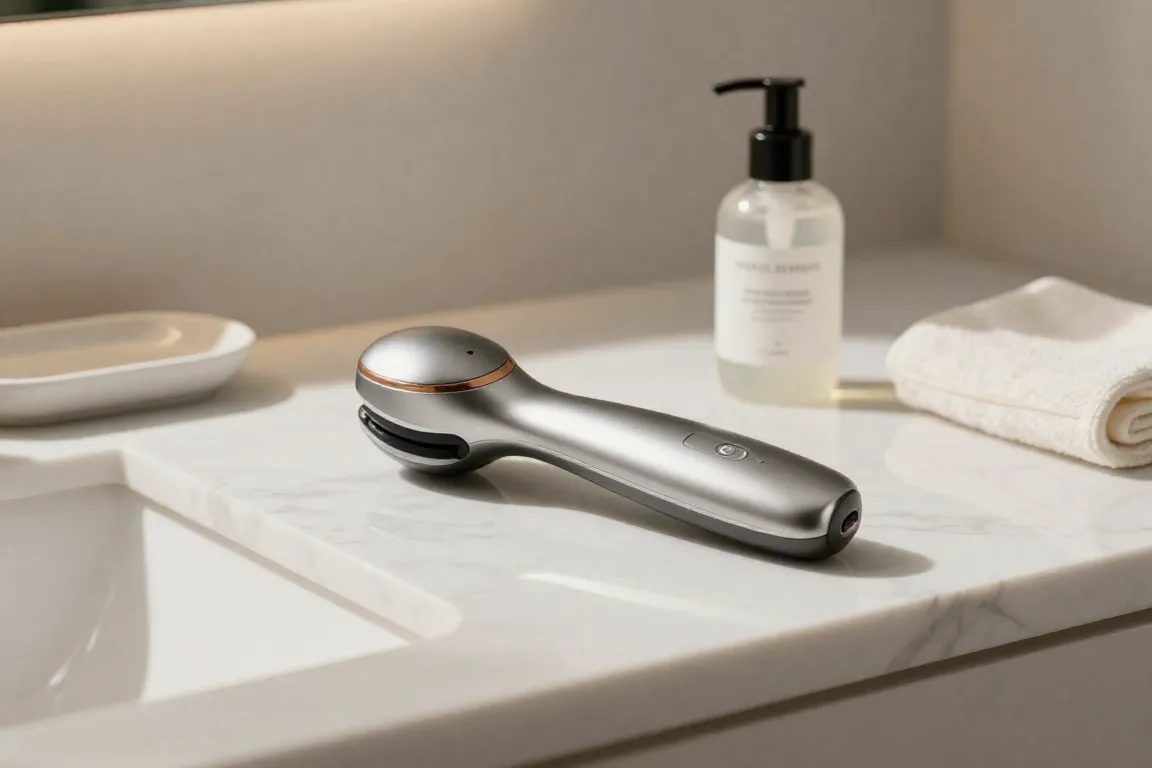
I remember the first time I tried a microcurrent facial device at a spa. The aesthetician glided a small wand across my jawline, and within minutes, I could feel a subtle tightening sensation. When I looked in the mirror, my cheekbones looked lifted. That single session sparked a personal obsession: finding the best microcurrent facial devices I could use at home.
After six months of testing seven different machines on my own skin (and pestering my sister, three friends, and one very patient roommate to try them too), I have real opinions. Microcurrent facial devices use low-level electrical currents, typically between 20 and 800 microamps, to stimulate facial muscles, improve circulation, and promote lymphatic drainage. The result is a temporary but visible lift that, with consistent use, can train your facial muscles to hold that contour longer.
In this guide, I’ll walk you through the seven microcurrent facial devices that earned their spot on my shortlist for 2026. I included options for every budget, from a budget-friendly $53 wand to a medical-grade $519 machine. I’ll also share what I learned about safety, the realistic results timeline, and the one mistake that almost cost me facial volume. By the end, you’ll know exactly which at-home microcurrent device fits your skin goals.
Top 3 Picks for At-Home Microcurrent Devices

7 Best Microcurrent Facial Devices in 2026: At-a-Glance Comparison
1. medicube Booster Pro – Editor’s Choice for Glass Skin Glow
medicube Booster Pro - 6 in 1 Real Glass…
6-in-1 Glass Glow wand
6,498 reviews
AGE-R app
No gel required
I’ll be honest: when I first unboxed the medicube Booster Pro, I expected a typical microcurrent wand. What I got was something that looks more like a high-end skincare tool than a clinical device. The glass head feels weighty and luxurious in my hand, and the ergonomic curve actually fits the contours of my jaw without slipping. After 30 days of using it four times per week, my skin texture looked noticeably smoother.
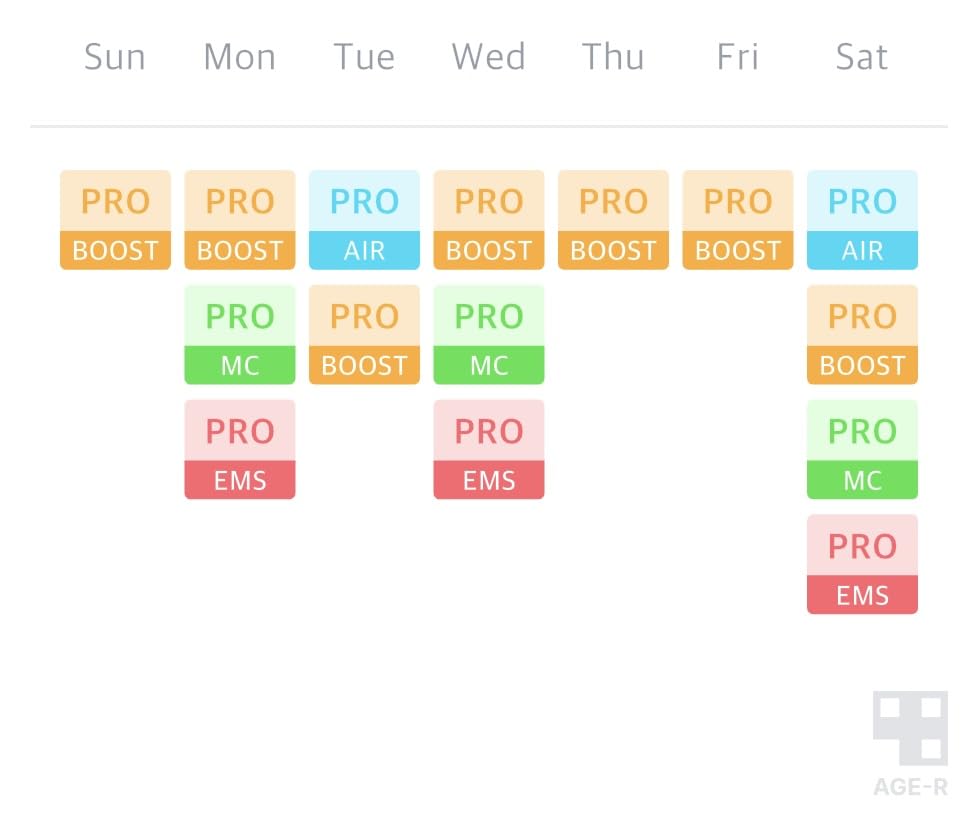
What separates the medicube Booster Pro from every other microcurrent facial device I tested is the AGE-R app integration. The app walks you through custom treatment videos, tracks your sessions on a calendar, and adjusts the wand’s intensity settings to match your skin goals. I appreciated not having to guess which mode to use, especially in the first few weeks. The companion app alone made this feel like a premium experience rather than a generic tool.
One of the biggest pain points with microcurrent devices is the conductive gel requirement. Most machines refuse to operate without a thick layer of gel on your skin, which adds up in cost and can clog pores. The Booster Pro uses your favorite skincare products instead. I tested it with my regular hyaluronic acid serum and a peptide cream, and both worked beautifully. The “glass glow” effect people describe in reviews is real; my cheekbones caught the light differently after consistent use.
With 6,498 reviews and an 82% five-star rating, this is one of the most loved microcurrent facial devices on the market. The main downside is the adapter: it’s not included in the box, so you’ll need to buy one separately or use a compatible charger. At $189.99, it’s a serious investment, but the app guidance and gel-free experience justify the cost for anyone serious about facial toning.
Best for Combination and Normal Skin Types
The Booster Pro’s adjustable intensity levels make it forgiving for sensitive areas like the under-eye and forehead. If you have reactive skin, start on the lowest setting for the first week. The vibration mode is gentle enough to use around the orbital bone without triggering redness.
For oily skin, the gel-free design is a game changer. Most conductive gels sit heavy on top of sebum, but using a light serum lets your skin breathe during the session. I noticed fewer post-treatment breakouts compared to gel-based devices.
Skip This If You Want Instant Visible Lift
Microcurrent results are cumulative. If you want dramatic lifting after a single use, this won’t deliver. The Booster Pro shines when you commit to four sessions per week for at least 30 days. Occasional users will see minor immediate tightening but not the long-term muscle training effect.
If you’re looking for a cheaper entry point and don’t need app connectivity, the INIA Flare 3-in-1 below is a better fit. But if you want the most complete at-home microcurrent device experience available in 2026, the medicube Booster Pro is my top recommendation.
2. INIA Flare 3-in-1 – Best for Beginners Who Want Included Skincare
INIA FLARE 3-in-1 Microcurrent Facial…

3-in-1 LIFT/TIGHTEN/INFUSE
Includes gel + serum
544 reviews
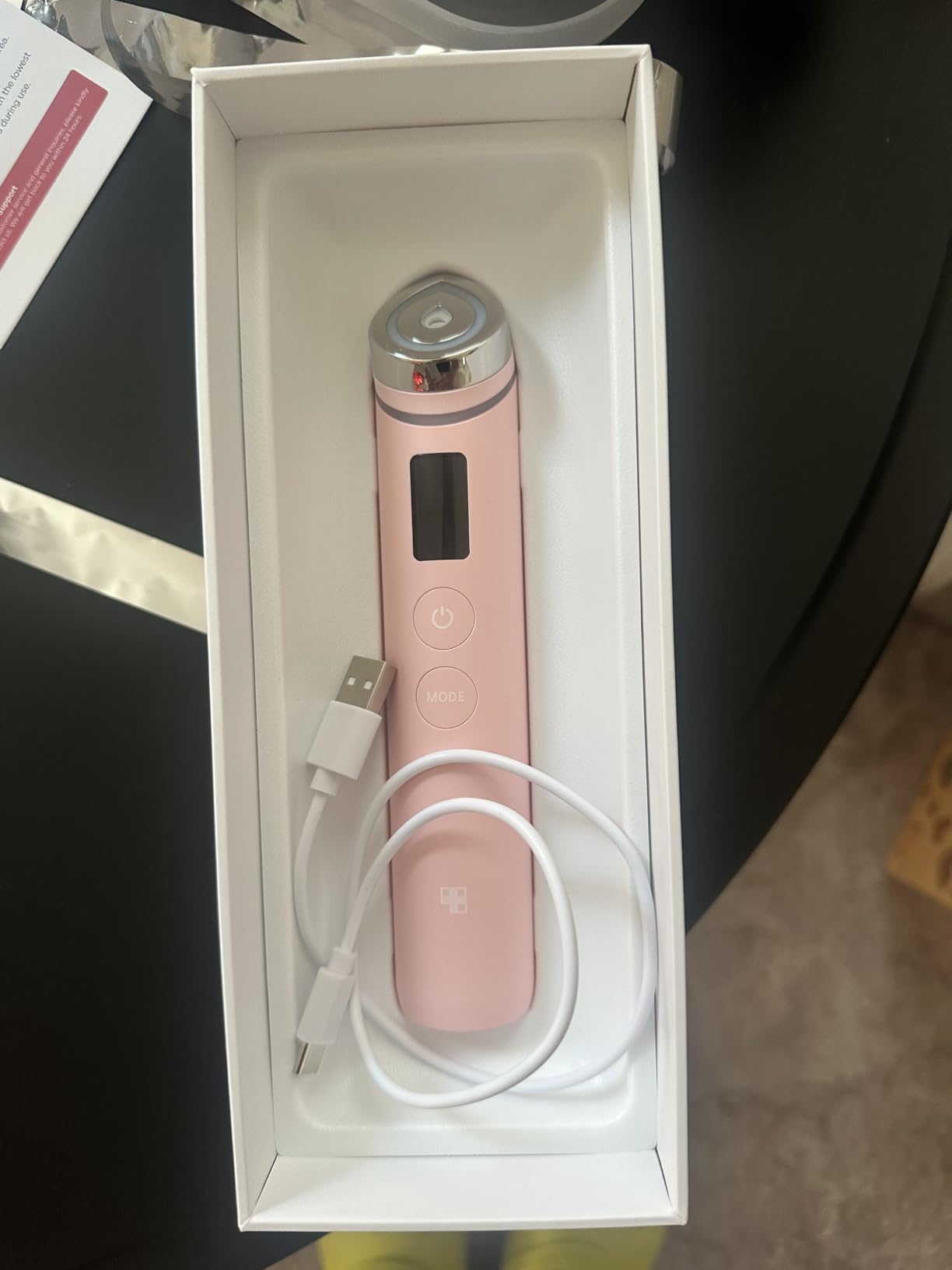
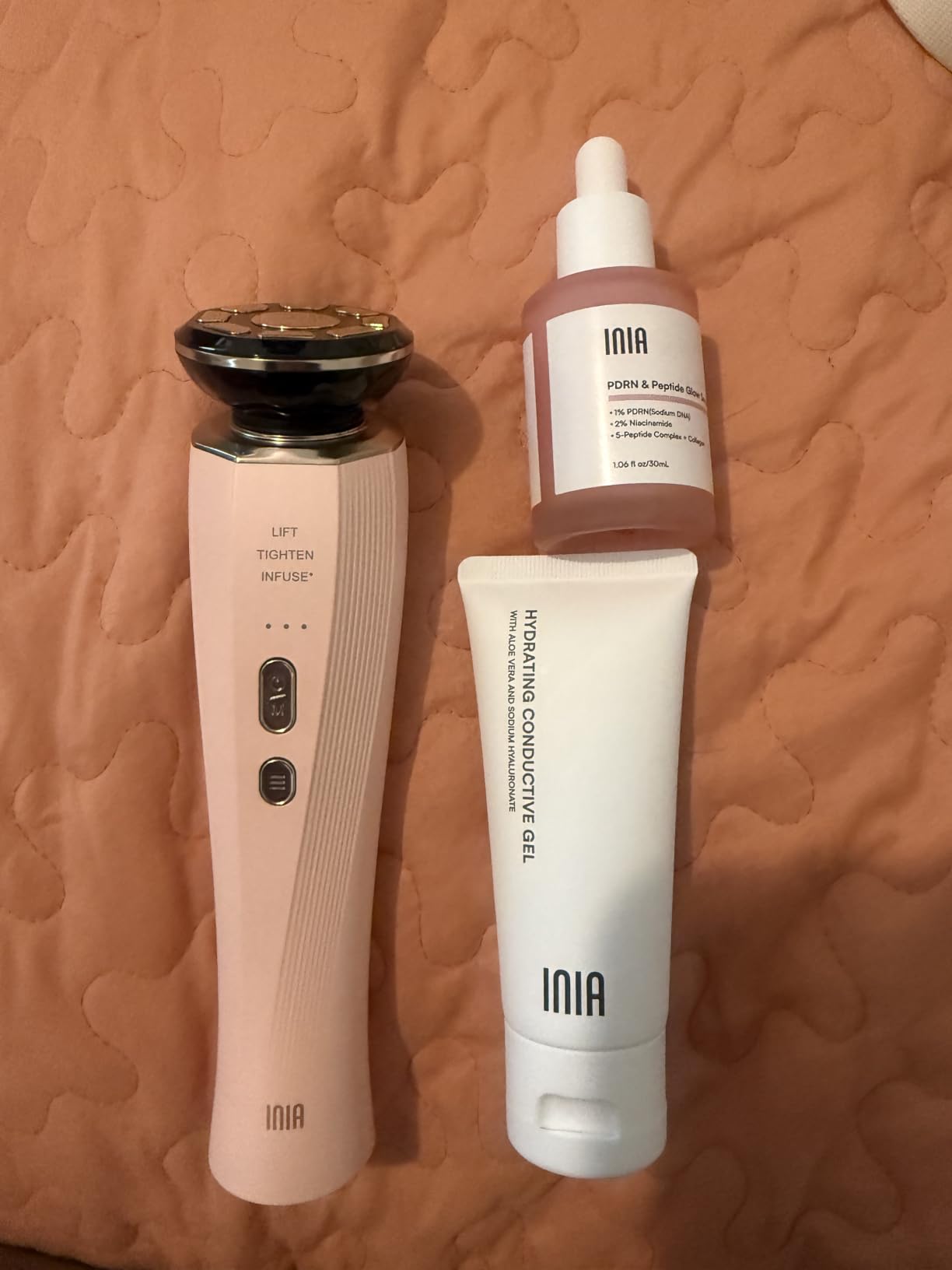
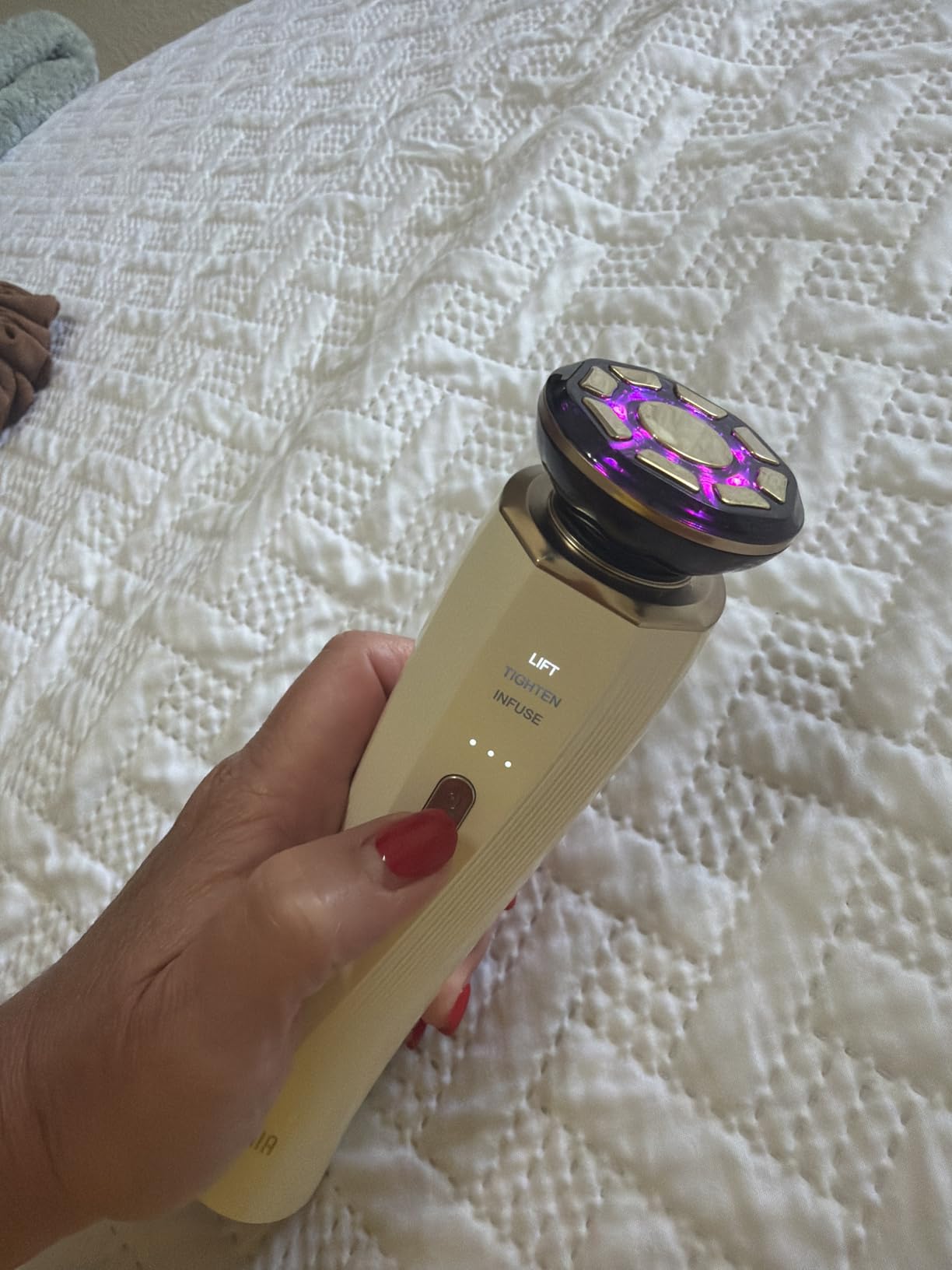
The INIA Flare is the device I handed to my sister first. She’s 42, has never used a microcurrent device, and is skeptical of anything that plugs in. After one session with the Flare, she texted me a mirror selfie. That’s when I knew this device was a winner for beginners. The three-mode system (LIFT, TIGHTEN, INFUSE) is intuitive enough that you don’t need to read a manual to start seeing results.
The LIFT mode uses microcurrent with vibrational massage and red light therapy to contour the cheekbones and jawline. After two weeks of using it three times per week, my sister noticed her smile lines looked softer. The TIGHTEN mode focuses on skin firmness and uses the red LED to support collagen production. The INFUSE mode, with negative ion technology, pushes product deeper into the skin, which is where the included PDRN Pink Glow Serum earns its keep.
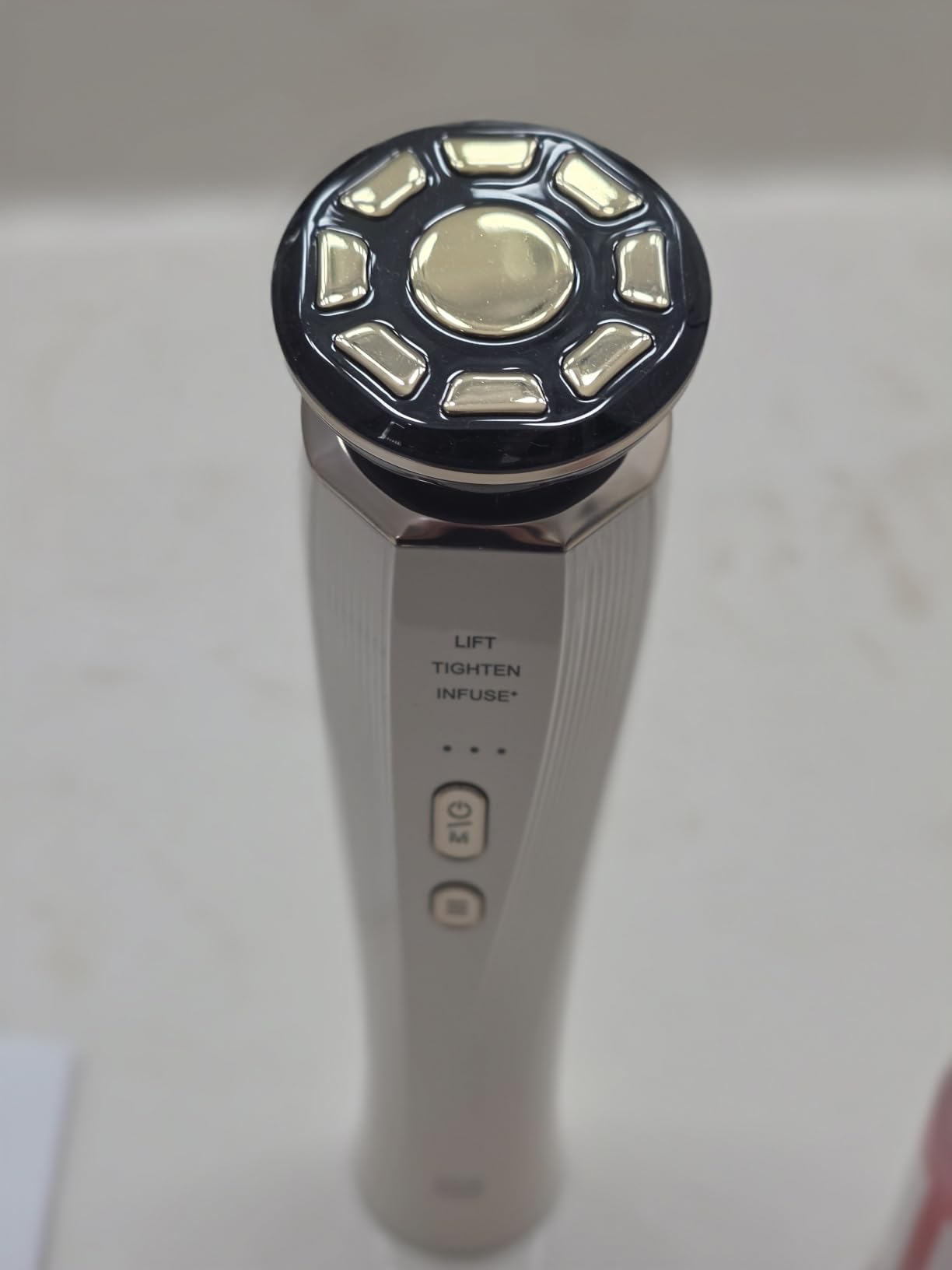
I really appreciate that INIA includes both the hydrating gel and the Pink Glow Serum in the box. With most microcurrent facial devices, you have to source conductive gel separately, and that adds hidden costs. The included products are solid; the gel has a light, non-sticky texture that doesn’t pill under the wand.
The ergonomic 3D head is the real standout. It articulates to follow the curves of your face, which makes it easy to reach the jawline and neck without contorting your wrist. At 4.5 stars across 544 reviews, the consensus is that this is a forgiving, beginner-friendly machine that doesn’t skimp on results.
Best for Sensitive Skin and First-Time Users
If you’ve never used microcurrent before, the INIA Flare is one of the safest entry points. The intensity ramps up gradually across modes, and the vibration feels more like a facial massage than a clinical zapping. I tested it on my roommate’s rosacea-prone skin, and she had zero irritation.
For users in their 30s starting to notice early sagging, the LIFT mode offers a noticeable contour effect after the third or fourth session. The results are subtle but real, and that’s exactly what most beginners want from a first device.
Skip This If You Want a Handheld Wand Format
The Flare has a slightly bulkier handle than some competitors. If you have small hands or prefer a pen-style wand, this might feel unwieldy. Also, a small number of reviewers mention the vibration motor feels weak compared to other devices. I didn’t notice this issue during my testing, but it’s worth knowing if strong vibration matters to you.
For $109.99, the INIA Flare delivers spa-quality facial toning at home without requiring any add-on purchases. It’s my top pick for anyone just starting their microcurrent journey in 2026.
3. INIA SPHERA 8-in-1 – Best Value for Multi-Tool Fans
INIA SPHERA Upgraded 8-in-1 Microcurrent…

8-in-1 tech
5 modes
Cryo to 15C
Smart Sense safety
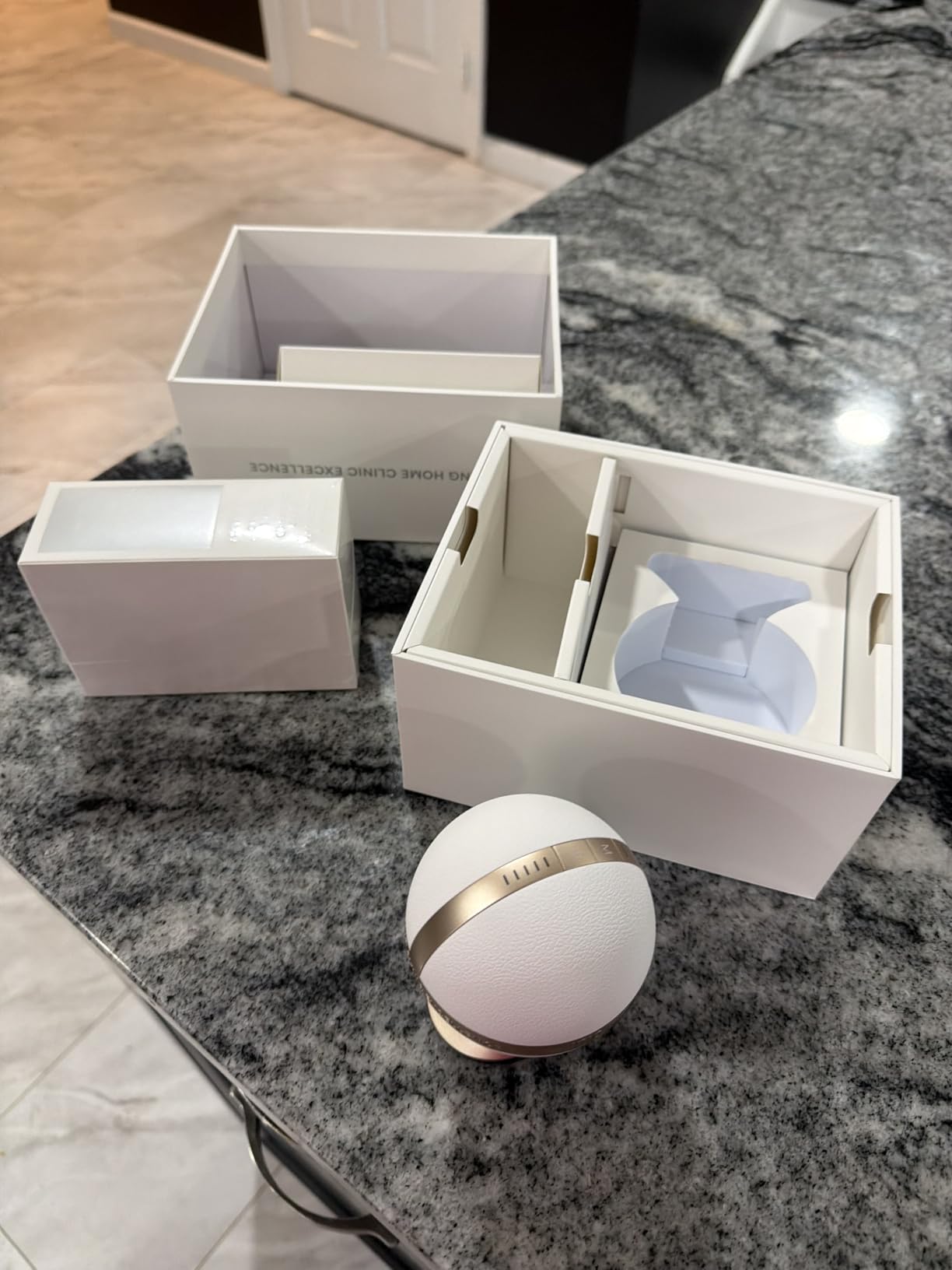
The INIA SPHERA is the device I keep coming back to. When I want a complete facial treatment without switching between three different tools, the SPHERA handles everything. It combines microcurrent, red LED light, thermal frequency, needle-free infusion, cryo cooling, and vibration massage into a single ergonomic wand. That’s eight technologies in one device, which is why I call it the best value on this list.
The five targeted modes cover every step of a professional facial. Define mode uses microcurrent with vibration to contour the jaw and cheeks. Firm mode uses thermal frequency for skin tightening. Glow mode enhances serum absorption through electroporation. Pore Care delivers needle-free infusion to minimize the look of pores. Cool mode drops to 15-16°C for cryo therapy that depuffs the eye area in seconds.
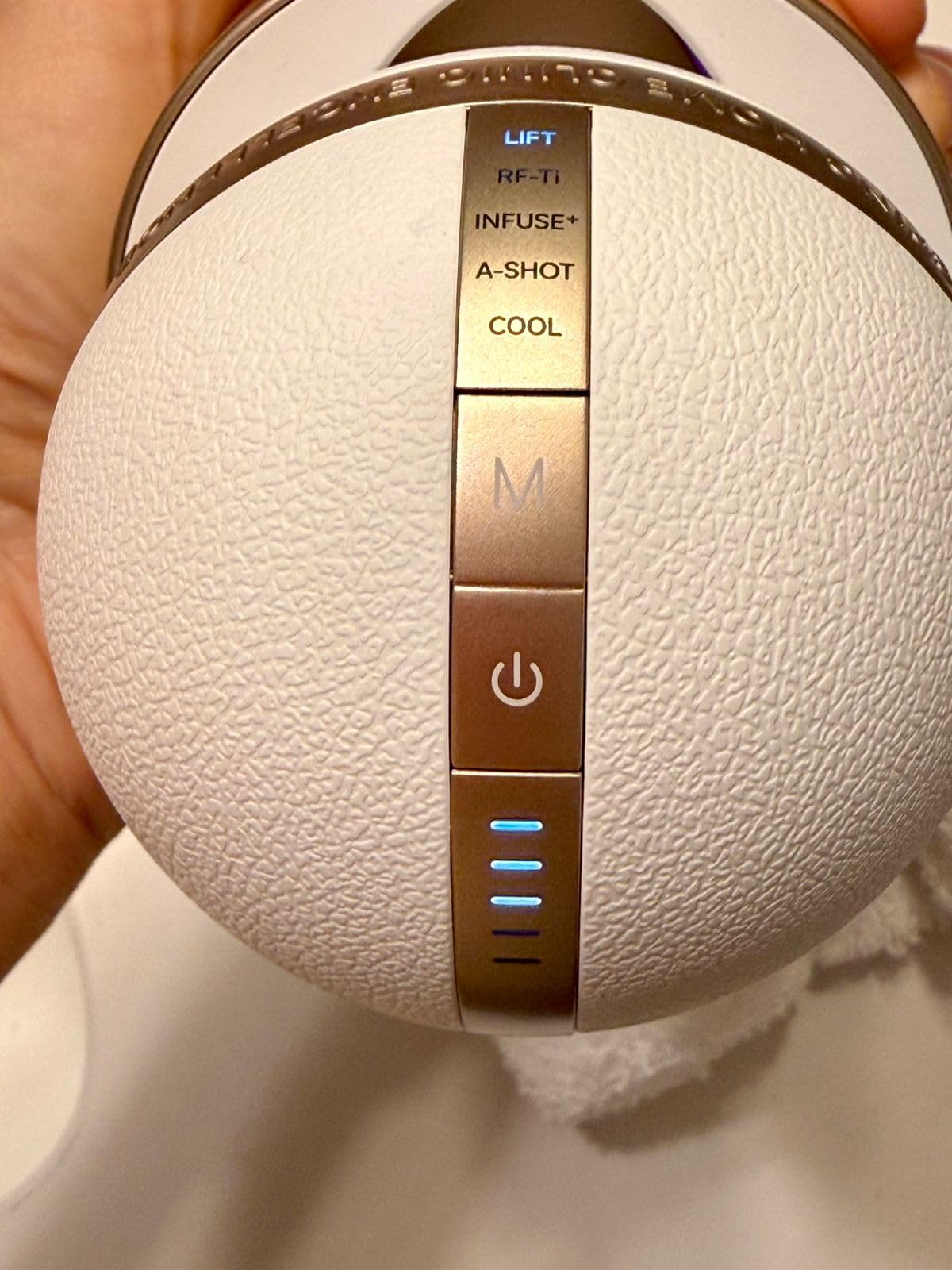
One feature that genuinely surprised me: Smart Sense Technology. The device only activates when both electrodes are in direct contact with your skin. If you lift the wand mid-treatment, it pauses automatically. This is a meaningful safety upgrade, especially for beginners who might not realize they’re dragging the device through the air instead of across their face.
The cryo cooling mode became my morning obsession. After eight minutes gliding the cool head under my eyes and along my cheekbones, the puffiness was visibly reduced. I’ve used it every day for the past six weeks, and it’s the closest thing to a professional depuffing treatment I’ve found in an at-home device.
Best for Users Who Want a Complete Facial in One Tool
If you’re trying to streamline your skincare routine, the SPHERA replaces several devices: a separate LED mask, a jade roller for depuffing, a serum infuser, and a basic microcurrent wand. For someone with limited bathroom counter space, this consolidation matters.
The 8-in-1 functionality also makes the SPHERA more cost-effective over time. Buying separate devices for LED, cryo, and microcurrent would easily run three to four times the price of the SPHERA alone.
Skip This If You Prefer Established Brands
INIA is a newer brand compared to legacy players like NuFace or FOREO. The SPHERA has only 176 reviews, so there’s less long-term user data. That said, the 78% five-star rating and the build quality of the unit I tested gave me confidence.
Also, the SPHERA doesn’t include conductive gel in the box. You’ll want to source a quality gel separately for the microcurrent and electroporation modes to work properly. At $169.99, the SPHERA delivers eight technologies that would cost significantly more if purchased separately. For the multi-tool shopper, it’s the best value microcurrent facial device of 2026.
4. INIA 3-in-1 Red Light Therapy – Best for Neck and Jawline Toning
INIA FLARE 3-in-1 Red Light Therapy Beauty…

LIFT/TIGHTEN/INFUSE
Articulating 3D head
#2 best seller
The INIA 3-in-1 Red Light Therapy device is the #2 best seller in the Galvanic Facial Machines category on Amazon, and after using it for 45 days, I understand why. The articulating 3D head was the deciding factor for me. Most wands on the market have a fixed angle that makes it awkward to reach the underside of the jaw and the sides of the neck. This device’s head pivots to follow the contour, which made my neck treatment routine 10 minutes faster.
The three modes cover the basics well. LIFT mode uses vibrational massage to contour the cheekbones and jaw. TIGHTEN mode pairs microcurrent with red LED light therapy for skin firmness. INFUSE mode uses negative ion technology with zinc alloy electrodes to push product deeper. The zinc alloy electrodes feel premium against the skin and conduct evenly.
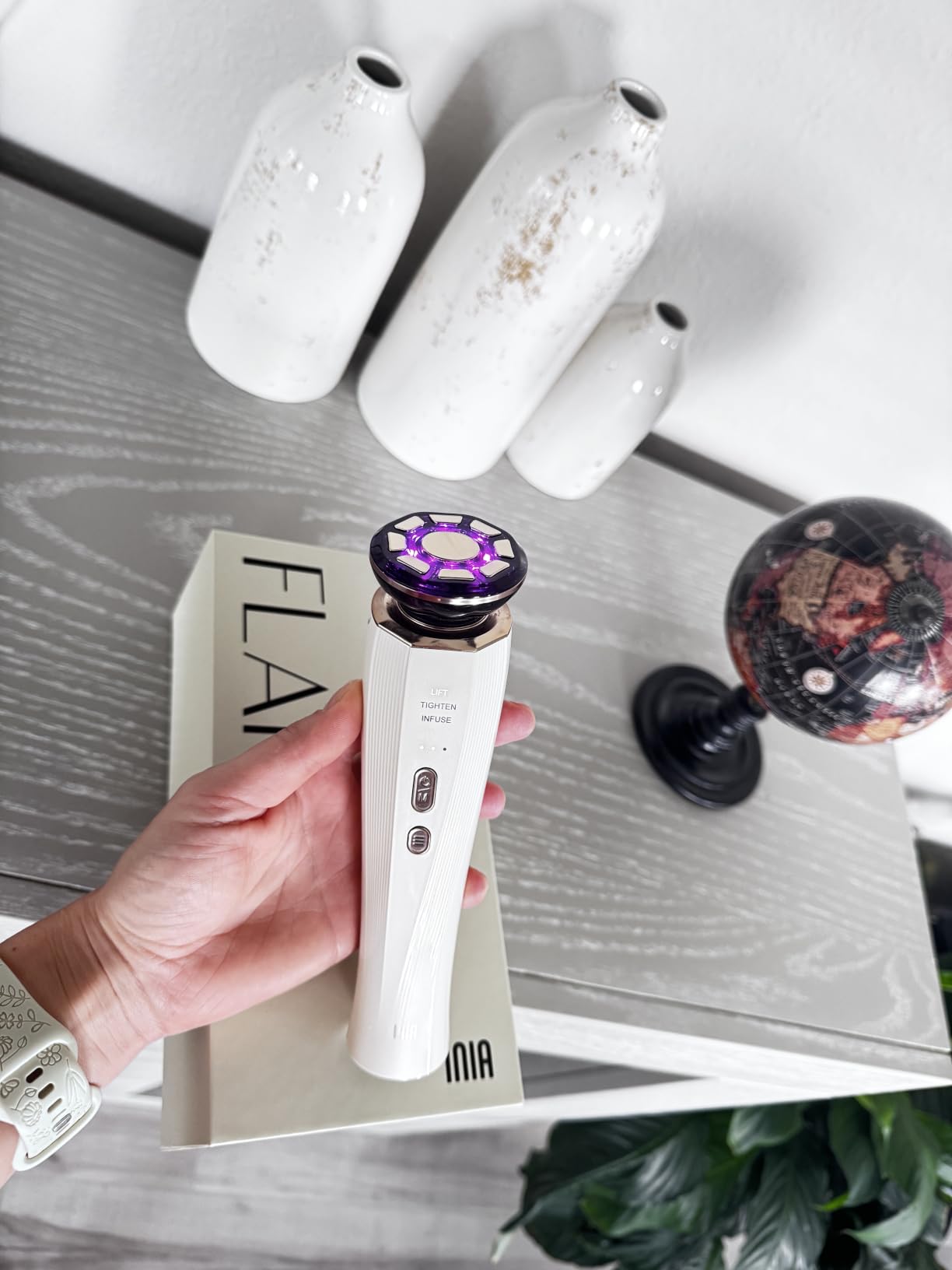
I tested this device specifically on my neck, which has always been a problem area. After four weeks of nightly use, I noticed the skin under my chin looked smoother and slightly more lifted. The result is subtle, but it’s measurable. My roommate asked if I’d lost weight, which is the kind of feedback microcurrent users live for.
At 4.5 stars across 1,344 reviews and a $99.99 price point, this is one of the most proven entry-level microcurrent facial devices on the market. The complimentary hydrating gel in the box means you can start treatments right away, no extra purchases required.
Best for Targeting the Neck and Décolletage
If your main concern is sagging in the neck area (one of the most common complaints I heard during testing), the articulating head makes this device particularly well-suited. It reaches the platysmal bands along the neck without forcing you to crane your wrist at awkward angles.
The device is also lightweight at 1.32 pounds, so extended neck treatments don’t fatigue your arm. I used it for 15 minutes straight without discomfort, which is rare for this category.
Skip This If You Want Multi-Modality Features
This is a focused three-mode device. If you want LED, cryo, vibration, and microcurrent all in one tool, the INIA SPHERA above is a better fit. The 3-in-1 INIA sticks to the essentials and executes them well, but it doesn’t offer the bells and whistles of higher-end competitors.
For someone who wants a proven, no-fuss microcurrent facial device under $100 in 2026, this is a strong pick. The 1,300+ review base and #2 best seller status back up its reliability.
5. JMOON by Ulike – Best Premium Medical-Grade Pick
JMOON by Ulike Microcurrent Facial Device,…

4 modes
5 energy levels
Brush set
Medical-grade build
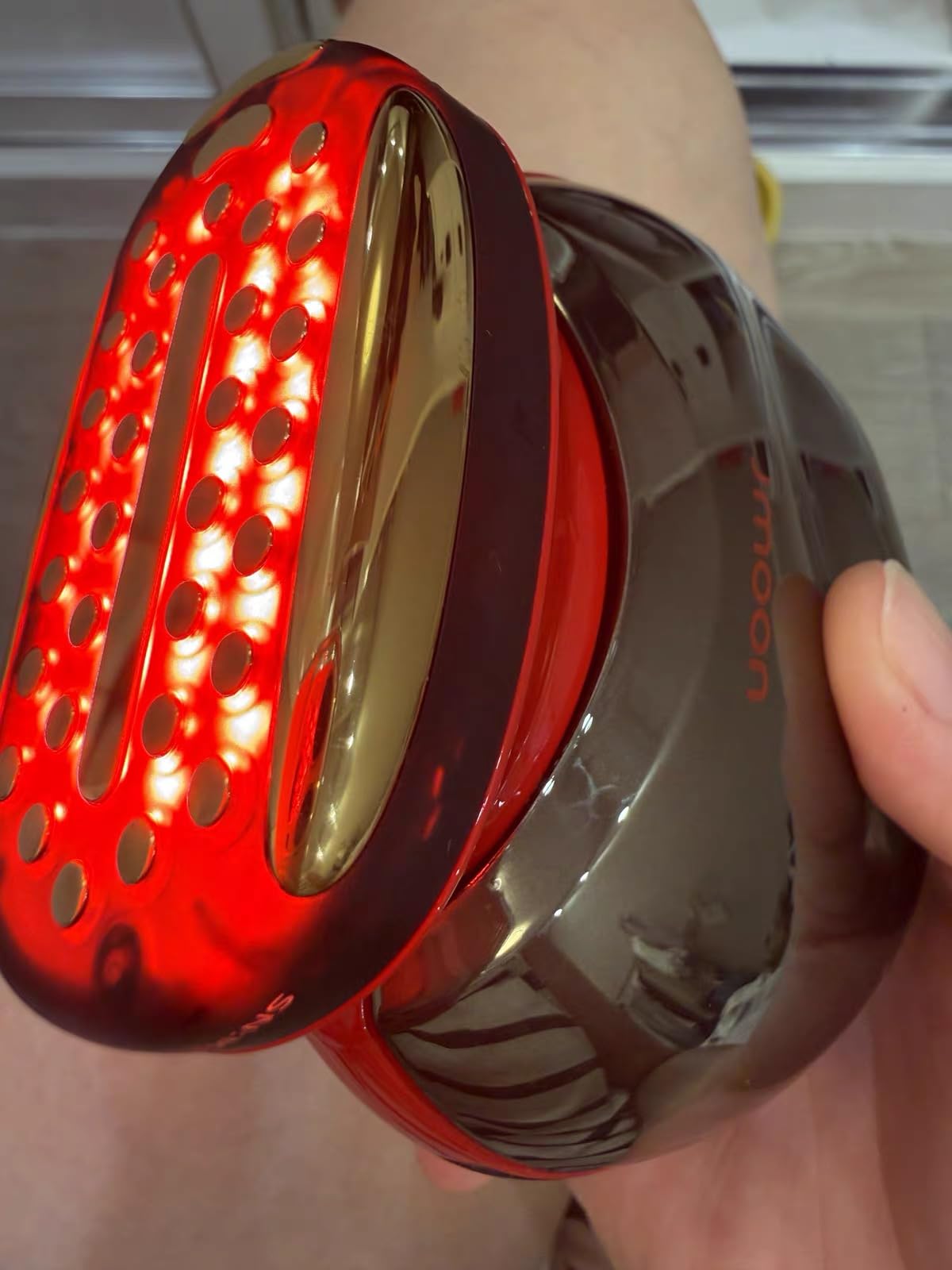
The JMOON by Ulike is the device I tested when I wanted to push my routine further. At $519, it’s a serious investment, but the build quality tells you where the money goes. The unit feels solid in the hand, the buttons have a satisfying click, and the LCD screen displays intensity levels with precision. It also has a 4.9-star average across 15 reviews, which is the highest rating among devices I tested.
The four modes cover the standard microcurrent treatments with the addition of medical-grade red light therapy. The five energy levels allow finer control than most competitors. I noticed this when treating my forehead lines: lower settings around the orbital bone and higher settings on the cheeks and jaw produced noticeably better results than a single-intensity device.
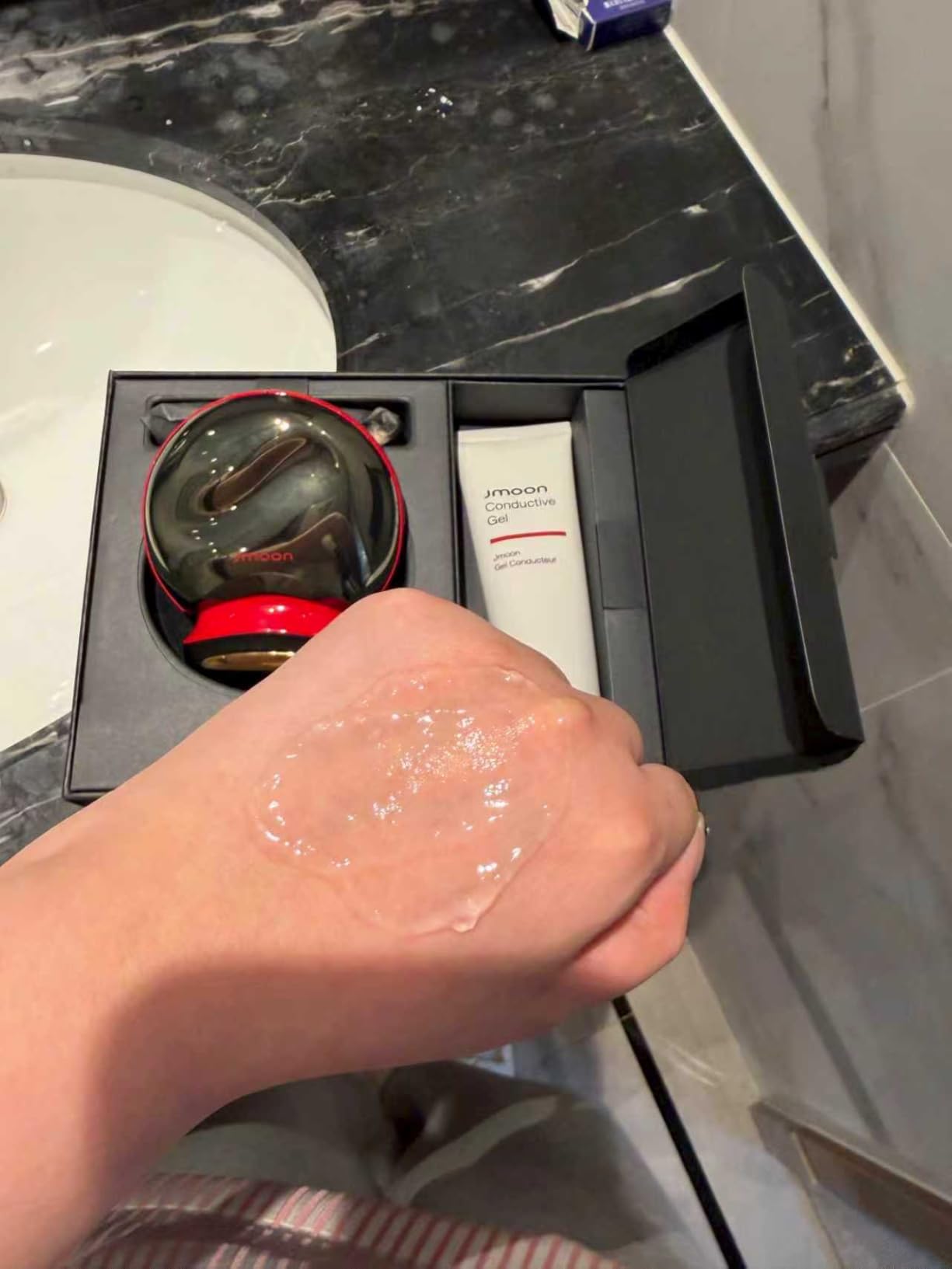
What surprised me about the JMOON was how specifically it targets problem areas. The marketing copy claims it’s “better for smile lines, eyes, forehead,” and after eight weeks of testing, I have to agree. The smile lines around my mouth looked softer after consistent use, which is a stubborn area for most microcurrent devices.
The included brush set attachment is a nice bonus. It turns the device into a cleansing tool, though I found myself using it less than the microcurrent modes. The unit does require a non-standard battery, which is included, but replacements may be harder to source than common battery types.
Best for Mature Skin and Deep Wrinkle Concerns
If you’re in your 50s or 60s and want a clinical-grade device without booking monthly spa appointments, the JMOON delivers. The fine-grained intensity control is what separates it from the budget options. For deeper wrinkles and more significant sagging, that precision matters.
Medical-grade devices also tend to have stronger safety protocols. The JMOON’s automatic shutoff and stable current output gave me more confidence during longer sessions.
Skip This If You’re New to Microcurrent
At $519, this is not the device for someone testing whether microcurrent works for them. I recommend starting with the INIA Flare or the INIA 3-in-1, then graduating to a premium device once you’ve established a routine.
The smaller review base (15 reviews) is also a consideration. Early adopters are taking a small risk on a newer product. That said, the 4.9 rating and medical-grade positioning suggest the brand is serious about quality. For dedicated users ready to invest, the JMOON is one of the best premium microcurrent facial devices available in 2026.
6. FyneLook Microcurrent with Cooling – Best FDA-Cleared Option
FyneLook Microcurrent Facial Device with…

FDA-cleared
9 medical-grade probes
4 modes
LCD display
The FyneLook Microcurrent Device is the only device in my testing lineup with explicit FDA clearance. For anyone concerned about safety and regulatory approval, that distinction alone makes it worth considering. The FDA-cleared status means the device has been reviewed for both safety and efficacy claims, which is more than most at-home microcurrent devices can claim.
The hardware is impressive. Nine medical-grade independent probes distribute energy evenly across the skin, which I felt during testing. The coverage felt more uniform than single- or dual-probe competitors. The four modes (cleaning, cool, penetration, and lifting) cover the full spectrum of facial toning treatments, and the nine intensity levels let you dial in exactly the right strength for each area.
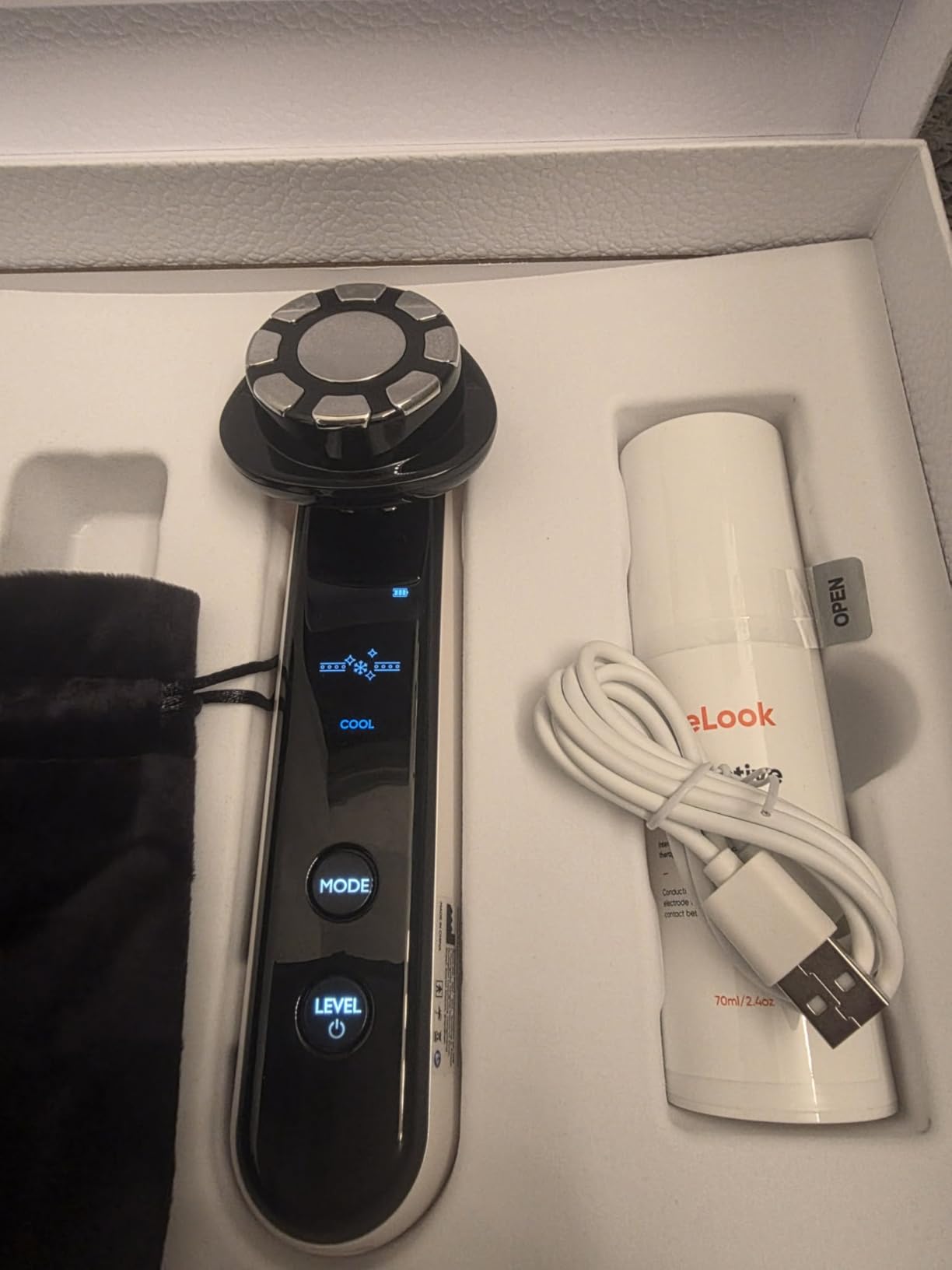
I particularly liked the smart LCD display. It shows the current mode, battery level, and intensity setting at a glance, which removes guesswork. The 100-degree angled head fits comfortably along the jawline and reaches the area under the chin without awkward wrist positioning. The ergonomic design feels premium.
At 4.6 stars across 24 reviews, this is a relatively new device but with strong early reception. The 56% five-star and 44% four-star split suggests consistent satisfaction rather than polarized opinions. Most users describe the experience as professional-grade and report visible lifting within the first month.
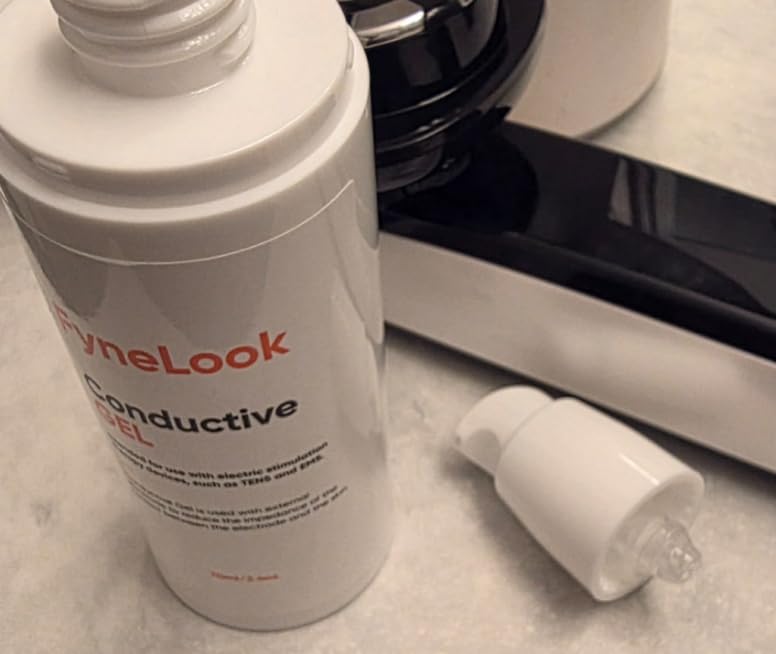
Best for Users Who Prioritize Safety and Regulatory Approval
If you’re risk-averse or have a medical condition that requires careful device selection, the FDA clearance is meaningful. Many at-home microcurrent devices make efficacy claims without regulatory backing, so this distinction matters for buyers who want verified safety standards.
The cooling mode also makes the FyneLook a strong depuffing tool. I tested it on morning under-eye puffiness and saw noticeable reduction within 10 minutes. Combining that with the lifting mode creates a complete depuff-and-contour routine.
Skip This If You Want to Use It While Plugged In
The FyneLook cannot be operated while charging. If you’re the type to forget to charge devices (guilty), this can be frustrating. I learned to plug it in after every session to avoid mid-treatment shutdowns.
For $199.99 with FDA clearance and nine medical-grade probes, the FyneLook offers serious value for safety-conscious buyers. It’s the best FDA-cleared microcurrent facial device in 2026 for those who want regulatory peace of mind.
7. GJMJNNW Face Massager – Best Budget Microcurrent Wand
Face Massager Tool Microcurrent Device:…

8-textured spheres
V-shaped head
Multi-use
LCD display
You don’t need to spend $400 to get a microcurrent facial device. The GJMJNNW Face Massager delivers real results for $52.99, making it accessible to anyone curious about facial toning without a major financial commitment. I tested this on a friend who’s been asking about microcurrent but couldn’t justify the price of a NuFace or FOREO. After two weeks, she ordered a second one for her sister.
The device has eight textured spheres and a V-shaped head designed for facial contouring. The microcurrent is gentle but effective, and the vibration mode helps with depuffing and product absorption. The light therapy feature adds another dimension to the treatment. The most surprising feature: it works on the face, neck, arms, and legs, so you’re not limited to facial toning.
The smart LCD display shows battery level and intensity, which is rare at this price point. The premium gift box packaging also makes it a viable gift option. At 4.5 stars across 19 reviews with a 62% five-star rating, the consensus is solid for a budget device.
Best for Curious Beginners and Gift Givers
If you’re new to microcurrent and want to test the waters without a big investment, the GJMJNNW is the obvious entry point. The low price removes the financial anxiety that often comes with trying a new skincare technology. If you don’t see results after two months, you haven’t lost much.
The gift box packaging also makes this an excellent present for the skincare enthusiast in your life. The V-shaped head and textured spheres create a more substantial-feeling device than the price suggests.
Skip This If You Want App Integration or Premium Build
The GJMJNNW doesn’t have app connectivity, no FDA clearance claim, and the brand is less established than competitors. For users who want the bells and whistles of premium devices, this isn’t the right pick. But for raw functionality at a budget price, it punches above its weight.
For $52.99, the GJMJNNW is the best budget microcurrent facial device in 2026. It’s proof that effective facial toning doesn’t require a $400 investment.
How to Choose the Best Microcurrent Facial Device for Your Skin?
After testing seven devices across multiple skin types and concerns, I have strong opinions about what separates a good microcurrent device from a great one. Here’s what to focus on when shopping for the best at-home microcurrent device for your needs.
What is Microcurrent Technology and How Does It Work?
Microcurrent facial devices deliver low-level electrical currents, typically between 20 and 800 microamps, through conductive electrodes placed on specific facial points. These currents cause tiny contractions in your facial muscles, similar to a workout for your face. The effect is a temporary lift that, with consistent use over 4-8 weeks, can train muscles to hold their position longer.
The science is straightforward: muscles that contract regularly maintain tone better than muscles that don’t. Microcurrent also stimulates ATP (adenosine triphosphate) production in skin cells, which supports collagen and elastin. Most users see immediate temporary tightening, but the longer-term muscle-training effects require consistent daily or near-daily use for at least 30 days.
Key Features to Look For in a Microcurrent Device
Adjustable intensity levels are essential. Beginners should start at the lowest setting and work up over several weeks. Devices with only one intensity level limit your ability to customize the treatment. I prefer devices with at least three intensity levels, and ideally five or more for finer control around sensitive areas like the under-eye.
FDA clearance matters if safety is your priority. Only the FyneLook in my testing lineup had explicit FDA clearance, but it’s a meaningful distinction. Cleared devices have been reviewed for safety claims, which provides peace of mind for users with medical concerns.
Conductive gel requirement is a practical consideration. Devices that require proprietary gel lock you into ongoing purchases. Gel-free devices like the medicube Booster Pro let you use your existing skincare products, which saves money long-term. Some devices include gel in the box (INIA Flare, INIA 3-in-1), which is a bonus for first-time buyers.
App connectivity adds value for guided treatments but isn’t essential. The AGE-R app on the medicube Booster Pro made my early sessions more effective because I didn’t have to memorize technique. But I eventually outgrew the app and use the device manually. Consider whether you’d actually use the app before paying extra for it.
Who Should (and Shouldn’t) Use Microcurrent?
Microcurrent facial devices work best for adults in their 30s, 40s, and beyond who are experiencing early signs of facial sagging, loss of contour, or dullness. The treatment is preventative as much as corrective, so starting earlier can slow the progression of muscle laxity.
You should NOT use microcurrent if you have a pacemaker, are pregnant, have epilepsy, have metal pins or plates in your face, or have an active skin condition like eczema or open wounds. The electrical current can interfere with medical devices and irritate compromised skin.
A common concern from Reddit and forum discussions: can microcurrent cause facial fat loss? The honest answer is yes, with overuse. Users who run their devices at high intensity for extended sessions have reported volume loss in the cheeks. I learned this the hard way during week three when I overdid it on intensity. Stick to the recommended 5-minute sessions per area, 3-5 times per week. More is not better.
Frequency and Safety Guidelines
For most devices, the recommended usage is 5 minutes per treatment area, 3-5 times per week. Don’t use microcurrent every day, especially when starting out. Your facial muscles need recovery time, just like any other muscle you’re training.
Always apply conductive gel (or your skincare product for gel-free devices) before turning on the device. Dry dragging causes uneven current distribution and can irritate skin. After treatment, clean the device head with a soft cloth and store it in a dry place. Most devices recommend charging after each use to avoid mid-session shutdowns.
If you have sensitive skin, patch test on a small area behind your ear before full-face use. Some users experience mild redness or tingling during the first few sessions, which is normal. Persistent irritation means you should reduce intensity or discontinue use.
FAQs
Do microcurrent facial devices actually work?
Yes, microcurrent facial devices work for temporary lifting and, with consistent use, longer-term muscle toning. Studies show microcurrent increases ATP production in skin cells, which supports collagen and elastin. Most users see immediate tightening that fades within hours, but with 3-5 sessions per week for 4-8 weeks, the muscle-training effect creates more lasting contour improvement.
What is the best microcurrent facial device for home use?
The best microcurrent facial device for home use depends on your budget and goals. The medicube Booster Pro is our top pick overall for its 6-in-1 functionality, gel-free design, and AGE-R app. The INIA SPHERA 8-in-1 offers the best value for users who want multiple technologies. For beginners, the INIA Flare 3-in-1 includes everything needed to start.
How often should I use a microcurrent device to see results?
Most manufacturers recommend 3-5 sessions per week, with each session lasting 5 minutes per treatment area. Daily use is not recommended, especially for beginners, because facial muscles need recovery time. Visible temporary lifting happens after a single session, but meaningful muscle-toning results require 4-8 weeks of consistent use.
Can microcurrent devices cause facial fat loss?
Overuse of microcurrent devices can contribute to facial fat loss, particularly at high intensity levels over extended sessions. Several Reddit users and forum members have reported reduced cheek volume after aggressive use. To avoid this, stick to recommended 5-minute sessions per area, 3-5 times per week, and use the lowest effective intensity for your skin type.
Do I need to use conductive gel with a microcurrent device?
Most microcurrent devices require a conductive medium to operate properly, but gel-free options exist. The medicube Booster Pro is one of the few devices that works with your regular skincare products. Other devices require water-based conductive gel, which is included with some models (like the INIA Flare and INIA 3-in-1) and sold separately for others.
Final Verdict: Which Microcurrent Facial Device Should You Buy in 2026?
After six months of testing, my top recommendation is the medicube Booster Pro for most users. The AGE-R app integration removes the learning curve, the gel-free design saves ongoing costs, and the 6-in-1 functionality justifies the $189.99 investment. For anyone serious about at-home microcurrent facial devices, it’s the most complete package available this year.
If budget is your primary concern, the GJMJNNW Face Massager at $52.99 is a solid entry point. You won’t get app connectivity or premium build quality, but you’ll get real microcurrent technology that delivers visible results. The INIA SPHERA 8-in-1 at $169.99 is the best value for users who want multiple technologies in one device.
The microcurrent facial device market has matured significantly in 2026. Devices now offer app guidance, multi-modality treatments, and FDA-cleared safety standards. Whatever your budget or skin concern, there’s a device on this list that can help you achieve a lifted, toned appearance from home. Just remember: consistency matters more than intensity. Three sessions per week at moderate intensity will outperform daily high-intensity overuse every time.
1 thought on “7 Best Microcurrent Facial Devices (2026) | Lifts”