
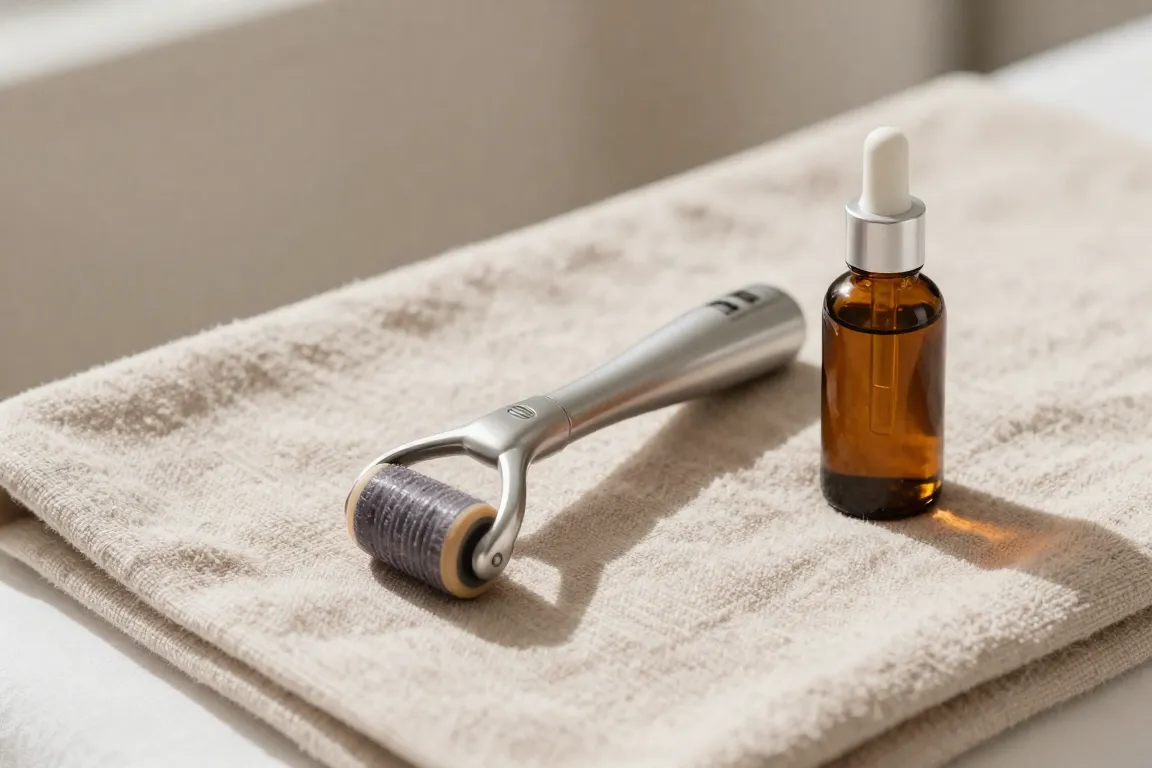
At-home microneedling has become one of the most searched skincare trends in 2026, with thousands of people trading spa appointments for a $30 dermaroller from Amazon. I have tested microneedling tools on myself over the past two years, and I have also talked to dermatologists and estheticians who treat the fallout from DIY sessions gone wrong.
The hard truth is that the dangers of at-home microneedling are real, well-documented, and largely preventable. This guide covers what can actually go wrong, what the FDA has said about these devices, and a step-by-step protocol so you can decide whether the risk is worth it for you.
What Is At-Home Microneedling and Why Do People Try It?
At-home microneedling means using a handheld tool, usually a dermaroller or an electronic microneedling pen, to create hundreds of tiny puncture wounds in the top layer of your skin. The goal is the same as a professional treatment: trigger your body’s natural collagen and elastin production so skin looks smoother, firmer, and more even over time.
How Microneedling Actually Works
When the needles penetrate the skin, your body interprets each puncture as a micro-injury. It responds by rushing growth factors and collagen-producing cells to the area. This process is called collagen induction therapy, and at professional depths it has decades of clinical evidence behind it for treating acne scars, fine lines, and stretch marks.
The catch is that the depth of those needles matters enormously. A 0.25 mm roller barely breaks the surface, while a 1.5 mm pen can reach deep enough to cause actual bleeding. That range of intensity is exactly what creates the gap between a safe home session and a trip to the dermatologist for infection control.
Why the At-Home Trend Took Off
Three things drove the surge. First, professional microneedling sessions cost between $200 and $700 each, and most people need 3 to 6 treatments for visible results. Second, social media made the technique look deceptively simple. Third, regulation is inconsistent. The FDA has cleared some at-home devices but warns explicitly that not every microneedling tool sold online meets safety standards.
The Real Dangers of At-Home Microneedling
The biggest dangers of at-home microneedling are infection, scarring, hyperpigmentation, and skin barrier damage. Each one has a specific cause, and each one is more common than the marketing lets on.
Infection: The Number One Risk of DIY Microneedling
Infection is the danger dermatologists mention first, and for good reason. You are deliberately puncturing your skin hundreds of times, which means bacteria on the device, on your face, or on your hands can be pushed directly into the deeper layers of tissue.
Reddit threads in r/SkincareAddiction are full of posts from users who developed red, painful, pus-filled bumps within 48 hours of a session. In several cases, the infection required oral antibiotics and left a lasting mark. Bacterial infections like staph are not theoretical. They are the most common complication reported in case studies of at-home microneedling injuries.
Scarring and Permanent Skin Damage
Scarring happens when needles go too deep, when pressure is uneven, or when the same area is rolled over too many times. Unlike a single professional treatment done with calibrated equipment, a hand-held roller is hard to control precisely. Too much pressure in one spot can break capillaries and damage the deeper dermis, where scars form.
Microneedling scars are often atrophic, meaning they look like small pits or dents, and they can be permanent without medical treatment. This is why the FDA specifically warns against using needles longer than 0.3 mm at home without professional guidance.
Wrong Needle Depth and Uneven Pressure
Choosing the wrong needle length is one of the most common mistakes. Beginners often assume longer is better because they have read that longer needles stimulate more collagen. In reality, needles longer than 0.5 mm require training to use safely. Anything beyond 1.0 mm should not be used at home at all.
Uneven pressure creates a different problem called tram-track scarring, where parallel lines of damage form along the path of the roller. I have seen this on real client photos from estheticians, and it is one of the hardest microneedling scars to reverse.
Cross-Contamination From Shared or Reused Tools
Dermarollers are technically single-use devices, even though they are sold as reusable. Every time you reuse a roller, you are reintroducing bacteria, skin cells, and serum residue into fresh micro-wounds. Some users share rollers between family members, which is a clear cross-contamination risk.
Studies have found that dermarollers retain biological material even after rinsing. Without hospital-grade sterilization between uses, there is no safe way to “clean” a used roller to a medical standard.
Hyperpigmentation and Post-Inflammatory Marks
Any trauma to the skin can trigger post-inflammatory hyperpigmentation, especially in medium and deep skin tones. Studies show that melanin-rich skin responds to microneedling with dark spots that can take 6 to 12 months to fade, even with proper aftercare.
This is one of the dangers of at-home microneedling that influencers rarely mention, because their before-and-after photos usually feature fair skin that responds with redness rather than discoloration.
Why Dermatologists Are Cautious About At-Home Microneedling
Most board-certified dermatologists do not recommend at-home microneedling for anything beyond 0.3 mm needle depth. Their caution comes from years of treating preventable complications and from regulatory guidance issued by the FDA.
What the FDA Says About Microneedling Devices
The FDA classifies microneedling devices based on needle depth. Anything at or below 0.3 mm is generally regulated as a cosmetic tool. Anything above that threshold may be considered a medical device subject to FDA clearance requirements. The FDA has issued explicit warnings about unapproved microneedling pens and rollers sold directly to consumers.
The FDA also maintains a MedWatch reporting system specifically for adverse events from microneedling devices. Reports of infection, scarring, and granulomas have all been logged, and the agency has flagged these for ongoing safety review.
Why Professionals Use Longer Needles Safely
Professional microneedling uses needles from 1.0 mm to 2.5 mm. That depth is what produces the dramatic results shown in clinical studies for acne scars and stretch marks. The reason it works in clinics and not at home is that professionals operate in a sterile field, apply topical numbing, monitor bleeding in real time, and have emergency protocols if something goes wrong.
You cannot replicate those conditions in a bathroom mirror. That gap between clinical safety and home use is precisely what creates the risk profile.
Who Should Avoid At-Home Microneedling Entirely
At-home microneedling is not safe for everyone. Certain skin conditions and medications make the procedure actively dangerous, even at the shallowest needle depth.
Active Skin Conditions That Rule Out Microneedling
If you have any of the following on the area you want to treat, skip microneedling entirely until a dermatologist clears you. These conditions increase infection risk dramatically:
- Active acne, especially inflamed or cystic breakouts
- Rosacea, particularly the papulopustular type
- Eczema, psoriasis, or any open dermatitis
- Cold sores or active herpes simplex outbreaks
- Open wounds, sunburn, or recent cuts in the treatment area
Medications and Health Factors That Increase Risk
Several medications thin the skin or suppress immune response. If you take any of the following, microneedling requires medical supervision:
- Accutane (isotretinoin) within the past 6 months
- Blood thinners or high-dose aspirin therapy
- Topical retinoids applied to the same area
- Immunosuppressants or chemotherapy drugs
- Uncontrolled diabetes, which slows wound healing
Pregnancy is another contraindication. There is no clinical data on safety, and infection risk is harder to treat with limited medication options.
How to Microneedle at Home Safely: A Step-by-Step Protocol
If you have decided that the at-home route is right for you, this protocol minimizes the dangers of at-home microneedling. Work through each step in order, do not skip steps, and treat every session like a minor medical procedure.
Step 1: Choose an FDA-Cleared, Single-Use Device
Use a sterile, single-use needle cartridge whenever possible. FDA-cleared microneedling pens with disposable cartridges are safer than reusable dermarollers because you discard the needle after each session. Do not buy unbranded rollers from random online sellers, and do not reuse cartridges. The cost is worth it.
Step 2: Sterilize Your Skin and Workspace
Wash your hands with antimicrobial soap for at least 20 seconds. Cleanse your face with a gentle, non-active cleanser and pat dry. Wipe the treatment area with 70 percent isopropyl alcohol and let it evaporate fully. Lay out a clean paper towel as your work surface, and disinfect any tools you will touch.
Your bathroom should be clean and free of pets during the session. Open a window or run a fan if your space is humid, because moisture breeds bacteria on surfaces.
Step 3: Select the Right Needle Length
For your first home session, use a 0.25 mm needle cartridge. This length is considered cosmetic and creates micro-channels without significant bleeding. As you gain experience, you can move to 0.5 mm, but you should not exceed that at home without professional training.
Needle depth matching matters. Use 0.25 mm for serum absorption and mild texture work. Use 0.5 mm only for more aggressive texture concerns, never for beginners, and never on the same area twice in one session.
Step 4: Use Gentle Pressure and Controlled Movement
Hold the pen at a 90-degree angle to the skin. Glide it across each section in horizontal, vertical, and diagonal passes, applying only the weight of the device itself. Do not press down. Let the needles do the work, and stop immediately if you see pinpoint bleeding that does not stop within a few seconds.
Aim for 4 to 6 passes per section maximum. More passes do not produce better results, they produce more trauma.
Step 5: Aftercare That Protects Your Skin Barrier
After the session, rinse your skin with cool water only. Do not use active ingredients like retinol, vitamin C serums, or exfoliating acids for at least 24 to 48 hours. Apply a bland, fragrance-free moisturizer or a hyaluronic acid serum, and only products labeled post-procedure safe.
Skip makeup for 24 hours, skip exercise and heavy sweating for 24 hours, and apply broad-spectrum SPF 30 or higher every morning for the following week. UV exposure on freshly microneedled skin is one of the fastest routes to hyperpigmentation.
How Often Can You Safely Microneedle at Home?
Frequency depends entirely on needle length. Going too often is one of the most common mistakes, because skin needs time to complete its healing cycle before you trigger another round of micro-injuries.
0.25 mm to 0.5 mm: Every 1 to 2 Weeks
At these shallow depths, the skin typically recovers within 48 to 72 hours. Most dermatologists recommend waiting 7 to 14 days between sessions to avoid cumulative barrier damage, which can show up as persistent redness, sensitivity, or a tight, uncomfortable feeling.
0.5 mm to 1.0 mm: Every 3 to 4 Weeks
At 1.0 mm, you are approaching professional territory. Recovery takes 5 to 7 days, but the skin remodeling cycle continues for roughly 4 weeks. Repeat sessions inside that window can cause overlapping injuries and increase scarring risk.
Above 1.0 mm: Skip and See a Professional
Anything above 1.0 mm is unsafe for home use in the vast majority of cases. At this depth, the needles reach the dermis, where collagen regeneration actually happens, and the risk of scarring, infection, and pigment changes rises sharply without clinical oversight.
Warning Signs: When to Stop and Call a Dermatologist?
Knowing when to stop is part of safe microneedling practice. Even with perfect technique, complications can happen, and early response is what determines whether you walk away with a small setback or a lasting scar.
During the Treatment
Stop immediately if you notice any of these signs. Do not finish the session, do not apply serums, and do not push through.
- Heavy bleeding rather than pinpoint spotting
- Sharp, escalating pain that does not ease between passes
- Skin tearing or dragging instead of gentle puncturing
- Visible device malfunction or bent needles
Within 24 to 72 Hours After
Some redness and mild swelling is normal. The following symptoms are not, and they warrant a call to a dermatologist the same day you notice them:
- Pus, hot spots, or yellow crusting on the treatment area
- Red streaking extending outward from the rolled area
- Fever, chills, or generally feeling unwell
- Persistent burning that does not ease with cool compresses
- Skin that turns dark brown or purple rather than fading evenly
At-Home Microneedling Safety Checklist
Print or save this checklist before every session. It is the shortest path to lower risk.
- Confirm there are no active breakouts, cold sores, or sunburn in the area
- Confirm you are not on Accutane, blood thinners, or immunosuppressive drugs
- Use a sterile, single-use needle cartridge from a trusted brand
- Wash hands, cleanse face, and disinfect with 70 percent isopropyl alcohol
- Start at 0.25 mm and never exceed 0.5 mm at home
- Apply only the weight of the device, no extra pressure
- Limit to 4 to 6 passes per section
- Skip actives for 48 hours, prioritize bland moisturizer and SPF
- Wait at least 7 days between 0.25 mm sessions, longer for deeper needles
- Stop and contact a dermatologist at the first sign of infection
Frequently Asked Questions About At-Home Microneedling Dangers
What is the safest device for microneedling at-home?
The safest at-home microneedling devices are FDA-cleared electronic pens with sterile, single-use needle cartridges set to 0.25 mm. Reusable dermarollers carry a higher cross-contamination risk because biological material can remain on the needles even after rinsing. Stick with disposable cartridges and replace them after each session for the lowest infection risk.
Does microneedling age you faster?
Microneedling itself does not age the skin. When done correctly at appropriate depths with proper aftercare, it can improve texture and stimulate collagen. However, doing it too often, at too deep a level, or without sun protection can damage the skin barrier and create chronic inflammation. That cumulative damage, not the microneedling itself, is what can age skin faster over time.
Do dermatologists recommend at-home microneedling?
Most board-certified dermatologists recommend limiting at-home sessions to 0.25 mm or 0.3 mm needle depths only, and they refer patients to clinics for anything deeper. Professional treatments use calibrated equipment in sterile settings, which is the safest path for results that require longer needles. At-home devices can be a useful maintenance tool but are not a substitute for clinical care.
How often can you safely microneedle at-home?
At 0.25 mm depth, most people can safely microneedle every 7 to 14 days. At 0.5 mm, every 3 to 4 weeks is the safer window. Anything deeper than 1.0 mm should be done by a professional, not at home. Waiting between sessions lets the skin complete its full healing cycle before triggering another round of micro-injuries.
Is microneedling at-home risky?
Yes, at-home microneedling carries real risks. The most common complications are bacterial infection, scarring, hyperpigmentation, and skin barrier damage. Most incidents come from improper sterilization, wrong needle depth, or repeated sessions without enough healing time. With sterile technique and conservative depth, the risk drops significantly, but it never disappears entirely.
What can go wrong with microneedling at-home?
The most reported problems are skin infections requiring antibiotics, permanent scarring from needles that are too long, hyperpigmentation that takes months to fade, tram-track scarring from uneven pressure, allergic reactions to serums applied post-treatment, and flare-ups of underlying skin conditions like rosacea and acne. Most of these outcomes are preventable with proper technique and aftercare.
Final Verdict: Is At-Home Microneedling Worth the Risk?
If you want occasional serum absorption and mild texture work, at-home microneedling at 0.25 mm with sterile single-use cartridges is a reasonable, low-risk option. If you want real results on acne scars, deeper wrinkles, or stretch marks, the dangers of at-home microneedling rise sharply at the depths required, and a professional treatment is the safer investment.
The pattern I have seen across both my own use and the broader community is straightforward. Respect the depth limits, sterilize everything, space sessions properly, and treat any sign of infection as urgent. Skip microneedling during active skin flares and on Accutane. With those guardrails in place, the practice can be safe for most people, and a good complement to your broader skincare routine in 2026 and beyond.