
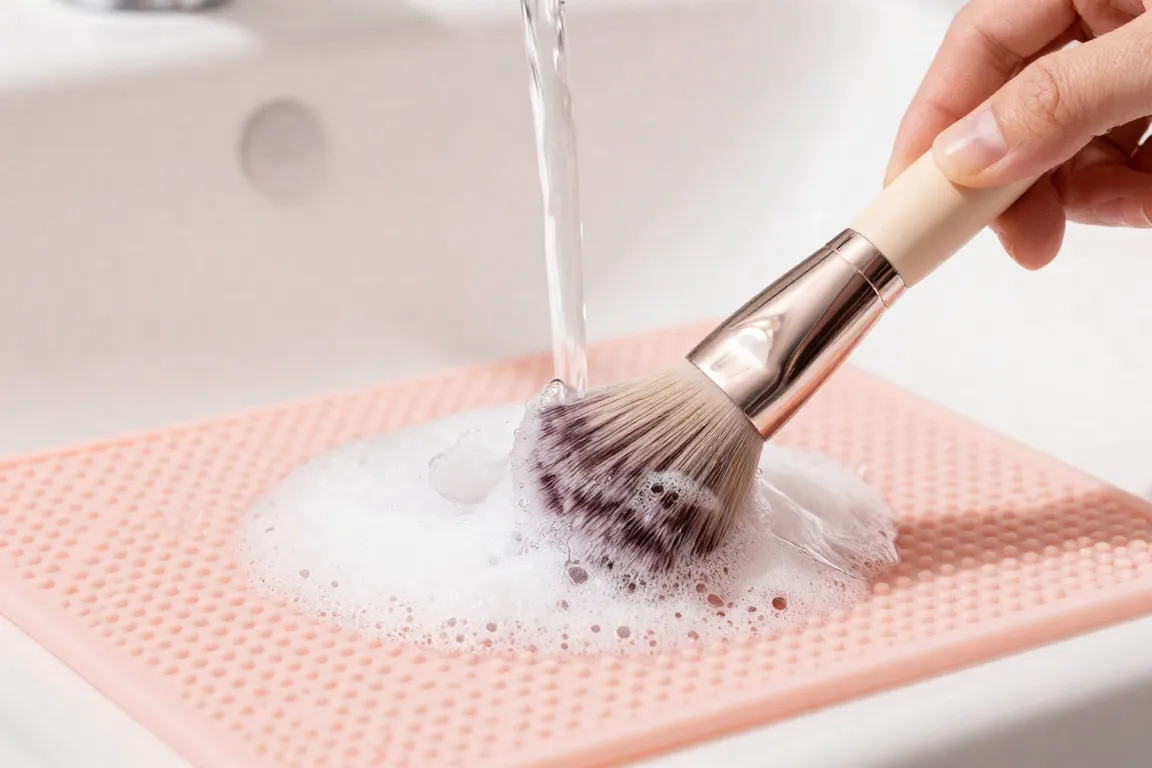
I spent three years fighting cystic acne along my jawline before I made one change that finally broke the cycle. I started cleaning my makeup brushes properly. Not occasionally, not when they looked dirty — I mean a real routine that wiped out the bacteria I had been smearing across my face twice a day for years.
If you are dealing with deep, painful cystic breakouts that refuse to clear no matter what products you layer on, your brushes might be the missing piece. According to a beautyblender survey, 61% of people clean their makeup brushes once a month or less, and 22% never clean them at all. Learning how to clean makeup brushes to prevent cystic acne changed my skin, and the same simple routine can change yours.
I built this guide to walk you through every step — from understanding why dirty brushes trigger cystic acne (not just regular pimples), to a foolproof cleaning method, frequency recommendations, and the storage habits that keep bacteria from coming back. No fluff, just what works.
Why Dirty Makeup Brushes Cause Cystic Acne?
Dirty makeup brushes cause cystic acne because they continuously deposit bacteria, dead skin cells, and oxidized oils back into your pores. Each time you apply foundation or powder, your brush picks up sebum and microbes from your skin, then sits in a humid bathroom environment where those microbes multiply before the next application.
Cystic acne is different from surface-level pimples. It forms deep in the skin when pores become blocked and inflamed at the dermis level. Bacteria — specifically Cutibacterium acnes — thrive in that blocked environment, triggering the immune response that creates the swollen, painful lumps characteristic of cystic breakouts.
Research highlighted by Curology and dermatology sources has identified several concerning microbes on unwashed makeup brushes, including E. coli, Staphylococcus (staph), and fungal organisms. These do not just worsen existing acne — they can cause secondary infections that mimic or worsen cystic breakouts.
The cycle looks like this: brush touches inflamed skin, picks up bacteria, bacteria multiply in the bristles overnight, brush reapplies bacteria to the same area the next day, breakout deepens. This is why so many people on Reddit’s SkincareAddiction forum report that cystic jawline and cheek acne clears up only after they deep clean or replace their brushes.
How to Clean Makeup Brushes Step by Step?
This is the exact seven-step deep cleaning method I use every week. It takes about 15 minutes of active time and follows the protocol recommended by the American Academy of Dermatology (AAD), with my refinements for acne-prone skin.
Step 1 — Rinse the bristles under lukewarm water. Hold the brush with the bristles pointing downward so water runs off the tips, not into the ferrule (the metal band that holds the bristles). Water inside the ferrule loosens glue and causes shedding. Use lukewarm — never hot — water because heat damages synthetic fibers and natural hair alike.
Step 2 — Apply a small drop of gentle cleanser. Place a pea-sized amount of gentle shampoo, baby shampoo, or a dedicated brush cleanser in the palm of your hand. For acne-prone skin, I prefer a fragrance-free, non-comedogenic formula. Avoid dish soap — it strips natural bristles and leaves residue that can transfer to your face.
Step 3 — Massage the bristles gently in circular motions. Work the cleanser through the bristles using the palm of your hand or a textured silicone cleaning mat. You will see makeup residue — sometimes a shocking amount — release from brushes that looked clean seconds ago.
Step 4 — Rinse until the water runs completely clear. Keep the brush angled downward. If any color or cloudiness remains, repeat the cleansing step. Leftover cleanser itself can irritate acne-prone skin, so thorough rinsing matters.
Step 5 — Squeeze out excess moisture. Gently pinch the bristles between a clean paper towel or microfiber cloth to remove water. Never wring or twist — this permanently bends bristles out of shape.
6 — Reshape the bristles. Use your fingers to gently press the bristles back into their natural shape. This step preserves the brush’s performance and prevents splayed, uneven application that forces you to press harder and irritate skin.
Step 7 — Lay flat to dry overnight. Place brushes flat on a clean paper towel or towel in a well-ventilated area, ideally with the bristles slightly hanging off the edge of a counter so air circulates underneath. Standing brushes upright to dry allows water to seep into the ferrule and promotes bacterial growth.
For sponges like beautyblenders, the method is slightly different: wet the sponge, work in a liquid cleanser, squeeze and rinse repeatedly until the water runs clear, then air dry in a ventilated space. Replace sponges every three months maximum — they are far more porous than brushes and harbor bacteria faster.
Quick Daily Cleaning Between Deep Cleans
Deep cleaning once a week is the baseline, but if you have active cystic acne, a daily quick-clean step makes a measurable difference. No competitor I reviewed covers this, so here is what works in my routine.
The fastest method is a daily brush spray. Keep a dedicated makeup brush sanitizer spray or 70% isopropyl alcohol in a fine mist bottle on your vanity. After each use, mist the bristles lightly from about six inches away, then swipe them back and forth on a clean paper towel to remove surface product and microbes.
Paula’s Choice suggests that 91% alcohol can quickly sterilize brushes, but I reserve high-percentage alcohol for spot sanitizing only — daily use of 91% alcohol on natural-hair brushes dries them out and causes brittleness. For daily maintenance, 70% alcohol in a spray form is the safer middle ground.
If you use the same foundation brush every day, consider owning two identical brushes and alternating them. This gives each brush a full 24 hours to dry completely between uses, which dramatically reduces microbial growth compared to using a damp brush again the next morning.
How Often You Should Clean Your Brushes?
The AAD recommends washing makeup brushes every 7 to 10 days for general skin health. For anyone prone to cystic acne, I recommend tightening that to every 5 to 7 days, and daily quick-cleaning the brushes that touch active breakouts directly.
Frequency also depends on brush type and product type. Liquid and cream foundation brushes need more frequent cleaning than powder brushes because wet products feed bacterial growth faster. If you use liquid foundation daily, that brush should be deep cleaned twice a week minimum.
Concealer brushes used over acne lesions are the highest priority. They come into direct contact with bacteria-rich, inflamed skin and should be quick-cleaned after every single use and deep cleaned every 2 to 3 days. I keep a small rotation of cheap concealer brushes for exactly this reason.
Eye brushes used with wet products (gel liner, cream shadow) should be cleaned weekly. Dry powder eye brushes can stretch to 10 to 14 days between deep cleans, but only if you do not share them.
What to Use (and Avoid) When Cleaning Brushes
The cleanser you use matters as much as the cleaning method. Residue from harsh detergents can transfer to your skin and trigger the very breakouts you are trying to prevent.
Safe Options for Acne-Prone Skin
Gentle baby shampoo is my go-to and the AAD’s top recommendation. It removes makeup residue and oils without stripping bristles or leaving pore-clogging film behind.
Clarifying shampoo works well for dense foundation brushes that accumulate heavy buildup. Use it once every few weeks rather than every clean.
Dedicated brush cleansers from brands like Cinema Secrets or MAC are formulated to dissolve cosmetic pigments fast. They are more expensive but cut cleaning time significantly.
Micellar water is a gentle alternative for quick spot cleaning between deep washes. It dissolves surface makeup without water, which is handy when you need to use the brush again the same day.
A DIY option of one part unscented baby shampoo to two parts water in a spray bottle makes an effective daily quick-clean spray at a fraction of the cost.
Products to Avoid
Avoid dish soap and laundry detergent. They contain degreasers that destroy bristle fibers and leave residues that can cause contact dermatitis on acne-prone skin.
Avoid bar soap. It leaves a film that coats bristles and transfers to your face, potentially clogging pores.
Avoid fragranced body washes. Fragrance is a common irritant, and irritation worsens inflammatory acne.
Avoid soaking brushes in alcohol overnight. Prolonged alcohol exposure degrades the adhesive in the ferrule and causes bristle shedding. Alcohol is for quick sanitizing, not soaking.
Proper Drying and Storage to Prevent Bacteria
A clean brush that dries incorrectly becomes a bacteria farm within hours. Moisture trapped in dense bristles creates the exact warm, damp environment microbes love.
Always dry brushes flat, bristles slightly extended past the edge of a counter or table so air reaches them from all sides. Never stand wet brushes upright in a jar or cup — water seeps into the ferrule, dissolves the glue, and pools at the base of the bristles where bacteria multiply before the brush ever feels dry.
Give brushes a full 12 to 24 hours to dry before using them again. If a brush still feels damp when you apply makeup, you are pressing moisture and whatever bacteria survived washing directly into open pores.
For storage, avoid closed containers. Do not store brushes in a sealed makeup bag, drawer with no ventilation, or plastic sleeve. Use an open holder that keeps bristles upright once they are fully dry, and keep them away from the toilet area — flushing aerosolizes bacteria that can settle on bristles. If your bathroom is the only option, store brushes at least six feet from the toilet and close the lid before flushing.
When to Replace Your Makeup Brushes?
Cleaning extends brush life, but brushes are not immortal. Worn-out brushes harbor bacteria in micro-cracks and shed bristles that can irritate skin during application.
Replace natural-hair brushes every 1 to 3 years depending on use frequency. Replace synthetic brushes every 6 to 12 months for liquid and cream products, and every 1 to 2 years for powder brushes.
Replace any brush immediately if you notice: bristles shedding excessively, an odor that persists after washing, visible product stains that no longer come out, bristles that stay permanently splayed or misshapen, or a rough, scratchy texture that has developed over time.
Replace makeup sponges every 3 months, or sooner if they develop cracks, tears, or a persistent smell. Sponges are more porous than brushes and impossible to fully sanitize once bacteria penetrate deep into the foam.
If you are in the middle of an active cystic acne flare and you cannot remember when you last replaced your brushes, replacing them entirely is the safest move. A contaminated brush can reinfect healing skin and restart the breakout cycle even with diligent cleaning going forward.
Common Mistakes That Cause Cystic Acne Breakouts
Even with good intentions, small mistakes keep the bacteria-acne loop alive. These are the errors I see most often.
Mistake 1 — Sharing brushes. Sharing introduces foreign bacteria strains your skin has no tolerance for. Beautyblender’s research specifically calls this out as a breakout trigger. Never share brushes or sponges, especially with anyone who has active acne.
Mistake 2 — Using the same brush for multiple products. Mixing liquid foundation and concealer on one brush cross-contaminates products and spreads bacteria between areas of your face. Dedicate specific brushes to specific products.
Mistake 3 — Skipping the daily quick-clean on breakout areas. If a concealer brush touches an active cyst and goes unwashed until next week, it reinfects the same spot every single day. Quick-clean after every use on active lesions.
Mistake 4 — Not cleaning new brushes before first use. New brushes pick up dust, manufacturing residues, and microbes during shipping and display. Always wash new brushes before they touch your face.
Mistake 5 — Storing brushes in the bathroom near the toilet. Flushing aerosolizes bacteria that settle on bristles. Move your brush storage away from the toilet or always close the lid before flushing.
Mistake 6 — Using too-hot water. Hot water damages bristles and, more importantly, does not kill bacteria at tap temperatures. It only weakens the brush. Stick to lukewarm.
Mistake 7 — Skipping the dry time. Using a still-damp brush pushes moisture and surviving bacteria into open pores. Always allow a full 24 hours of drying time.
FAQs
How to clean makeup brushes to prevent acne?
Wet bristles with lukewarm water, massage in a gentle fragrance-free shampoo, rinse until water runs clear, squeeze out excess moisture with a paper towel, reshape bristles, and lay flat to dry for 24 hours. Deep clean every 7 to 10 days, or every 5 to 7 days if you are acne-prone. Quick-clean daily with a 70% alcohol spray on brushes that touch active breakouts.
What kills bacteria on makeup brushes?
Gentle shampoo combined with thorough rinsing physically removes the majority of bacteria. For disinfection, 70% isopropyl alcohol sprayed on bristles kills most surface microbes. Wash with soap and water first, then sanitize with alcohol — never soak brushes in alcohol, as prolonged exposure damages the bristle adhesive and causes shedding.
Could my makeup brushes be causing acne?
Yes. Dirty brushes harbor bacteria including E. coli and staph, along with oxidized oils and dead skin cells. Each time you apply makeup, these microbes transfer back into your pores, triggering inflammation. If you experience persistent breakouts near areas where brushes contact your skin (cheeks, jawline, chin) and your skincare routine otherwise should be working, dirty brushes are a likely culprit.
How often should you clean makeup brushes for acne-prone skin?
Deep clean every 5 to 7 days if you have acne-prone skin, and quick-clean daily with an alcohol spray any brush that touches an active breakout. Foundation and concealer brushes need the most frequent cleaning because liquid and cream products feed bacterial growth faster than powders.
Can dirty makeup brushes cause cystic acne specifically?
Yes. Cystic acne forms when pores become deeply blocked and inflamed. Bacteria-laden brushes repeatedly deposit microbes, oils, and dead cells into the same pores, deepening inflammation below the skin surface. Many cystic acne sufferers on skincare forums report significant improvement after starting a consistent brush cleaning routine or replacing contaminated brushes entirely.
Can you use shampoo to clean makeup brushes?
Yes. Gentle baby shampoo is one of the safest and most recommended cleansers for makeup brushes. It removes makeup residue and oils without stripping bristles or leaving pore-clogging film behind. Avoid clarifying shampoos for regular cleaning — reserve them for occasional deep cleaning of heavily soiled foundation brushes.
Final Thoughts
Learning how to clean makeup brushes to prevent cystic acne is one of the highest-impact, lowest-cost changes you can make for your skin. The routine is simple: lukewarm water, gentle shampoo, thorough rinse, flat dry, repeat every 5 to 7 days. Add a daily alcohol spray for any brush that touches active breakouts, and replace old, contaminated brushes when cleaning is no longer enough.
Stick with it for at least one full skin cycle — roughly 28 days — before judging the results. Cystic lesions that are already forming take weeks to resolve, so the breakouts you see in week one are not from your new clean brushes. The improvement shows up in the lesions that would have formed in weeks three and four but never did.
If you found this guide helpful, bookmark it, share it with anyone still using uncleaned brushes, and start your first deep clean today. Your skin is worth those 15 minutes a week.