
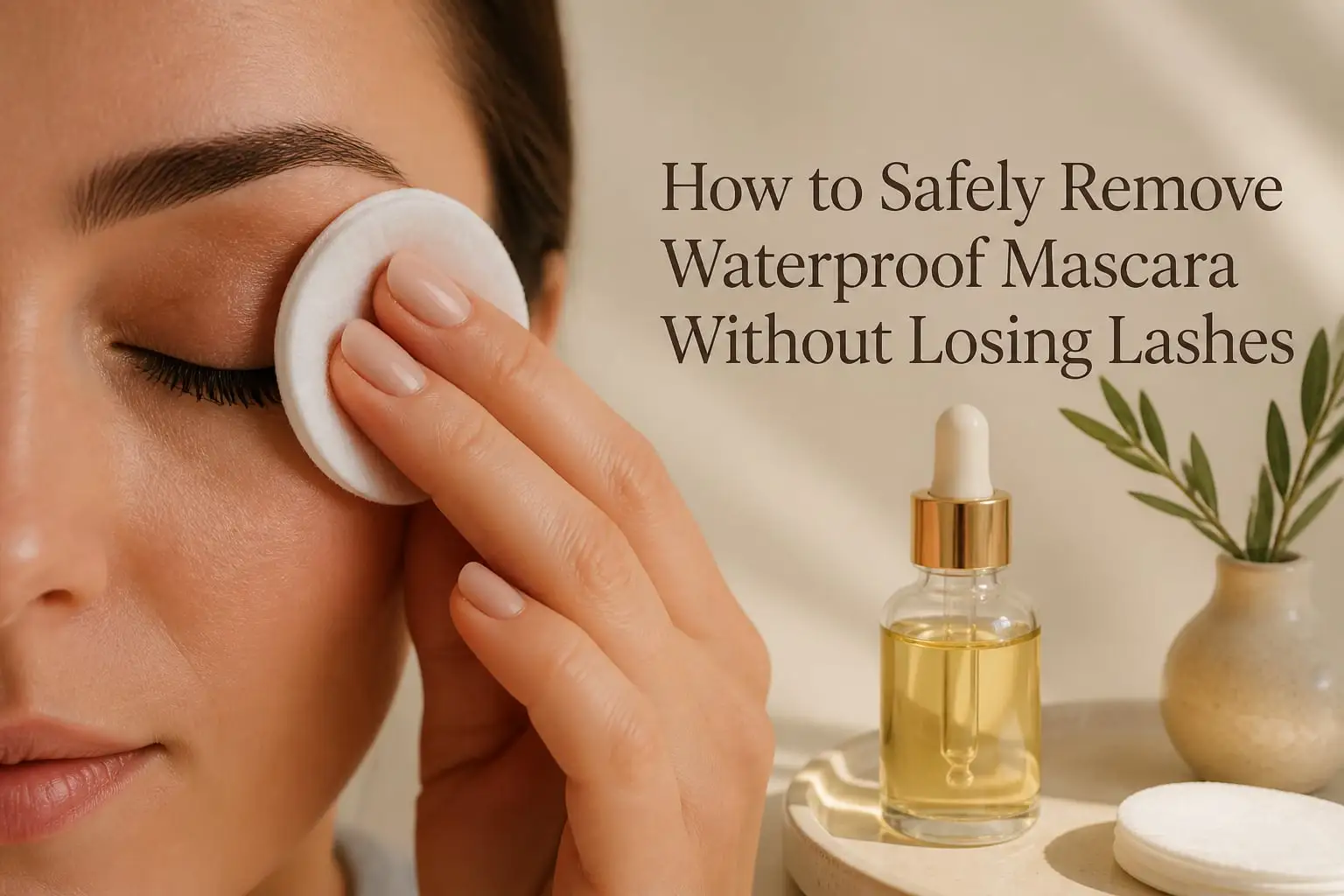
If you’ve ever pulled a cotton pad away from your eye and found 10 to 15 lashes stuck to it, you know the panic I want to address today. I’ve been there, and the truth is that the mascara is rarely the villain. The way you remove waterproof mascara is what either preserves your lashes or pulls them out at the root. After years of testing every technique, balm, and oil on the market, I can tell you exactly how to remove waterproof mascara without losing lashes, and the routine is simpler than you think.
Most of the lash loss people blame on waterproof mascara is actually caused by rubbing and scrubbing before the formula has had time to dissolve. Once you understand the chemistry and the lash growth cycle, you can switch to a gentler approach that keeps your fringe full.
Why Waterproof Mascara Is So Hard to Remove?
Waterproof mascara is built to survive sweat, rain, and tears, which is why regular face wash will not touch it. The formula uses waxes and film-forming polymers that create a flexible, water-resistant coat around each lash. That coat is exactly what makes the product tenacious, and it is also what your cleanser cannot break down with water alone.
To dissolve that waterproof film, you need an oil-based remover. Oil matches the chemistry of the waxes and polymers, and it lifts them away gently instead of forcing you to scrub. This is the foundation of every safe removal technique, and it is the reason dermatologists and ophthalmologists recommend oil-based cleansers for the eye area.
Most users who lose lashes during removal are not losing them to the mascara itself. They are losing them to friction. When the waterproof film is intact, even gentle tugging pulls lashes out at the root rather than sliding the pigment off.
Does Waterproof Mascara Actually Make You Lose Lashes?
Here is the distinction most articles miss: there is a difference between lash loss and lash damage. Lash loss means the entire lash is pulled out, bulb and all. Lash damage means the mascara dries out or weakens the hair shaft so it breaks mid-fiber.
Waterproof formulas can do both, but only when combined with rough removal. If you dissolve the film properly, the pigment slides off and the hair stays attached. If you scrub, you can break the lash or yank it out before it has finished its natural growth cycle.
Your lashes grow in cycles that last roughly 6 to 10 weeks. Losing one or two lashes per day is normal, because each lash is at a different stage of its cycle. If you see clumps coming out, that is technique, not biology. The good news is that every lash you pull out today will grow back, as long as the follicle is healthy.
Step-by-Step: How to Remove Waterproof Mascara Without Losing Lashes
Follow this exact sequence every night. I have tested it on long-wear, theatrical, and tubing formulas, and it works on all of them.
- Wash your hands so you are not transferring oils or bacteria into your eye.
- Soak a reusable cotton pad or soft cloth with an oil-based remover, cleansing balm, or bi-phase formula. The pad should be saturated, not damp.
- Press the pad against your closed eyelid and hold it in place for 20 to 30 seconds. Do not wipe yet. This is the press-and-hold step that does the heavy lifting.
- Gently slide the pad downward along the lash line. Use the weight of the pad, not pressure from your fingers. The mascara should transfer onto the pad in one pass.
- For stubborn lower lashes, use a cotton swab dipped in remover. Roll the swab downward rather than dragging it sideways.
- Rinse with lukewarm water or follow with a gentle water-based cleanser to remove any oily residue. This is the second cleanse that prevents milia around the eyes.
- Pat dry with a soft towel and apply a lash-conditioning serum or pure castor oil to support regrowth.
The 30-second hold is the step that almost everyone skips. Without it, you are essentially using oil as a lubricant for friction, which defeats the purpose. Give the formula time to break down, and the wipe becomes almost effortless.
Choosing the Right Remover for Your Lashes
Not all removers work equally well on waterproof mascara, and the right pick depends on your skin type and sensitivity. Here is a quick comparison to help you decide.
| Remover Type | Best For | Effectiveness on Waterproof |
|---|---|---|
| Cleansing balm | Dry or normal skin | Excellent |
| Bi-phase liquid remover | All skin types | Excellent |
| Micellar water | Oily or acne-prone skin | Good for light coats |
| Pure oils (coconut, jojoba, olive) | Natural routines | Very good |
| Petroleum jelly (Vaseline) | Budget option | Good, but can clog pores |
| Makeup wipes alone | Travel only | Poor on waterproof |
For thick, layered waterproof mascara, a cleansing balm or bi-phase formula is the most reliable. For sensitive eyes, jojoba oil is a great alternative because it mimics the skin’s natural sebum and rarely causes irritation. If you are prone to milia around the eyes, avoid heavy balms and stick with a lightweight bi-phase remover instead.
One tip from the MakeupAddiction community: if you only have micellar water on hand, soak a paper towel in it rather than a cotton round. The textured surface grips the mascara better and reduces the number of passes you need to make.
Common Mistakes That Cost You Lashes
These are the habits I see most often, and each one shortens your lash line over time.
- Rubbing side to side. This pulls lashes out at the root. Always wipe downward, in the direction of growth.
- Skipping the hold. Without 20 seconds of contact time, the waterproof film is still intact and you will need to scrub.
- Using dry cotton pads. A dry pad catches lashes and rips them out. Always saturate first.
- Using makeup wipes on waterproof mascara. Wipes do not stay wet long enough to dissolve the formula, and they create friction.
- Pulling on lashes to “test” if mascara is off. If residue remains, repeat the press-and-hold instead of tugging.
- Skipping the second cleanse. Leftover oil can clog the delicate glands around your eyes and lead to styes or milia.
Fixing even one of these mistakes usually makes a visible difference within two weeks. I noticed far fewer lashes on my cotton pad once I committed to the press-and-hold method.
Aftercare: Keeping Your Lashes Healthy After Removal
Removal is only half the routine. The skin around your eyes is the thinnest on your body, and your lashes benefit from a little extra care before bed.
After your second cleanse, apply a thin layer of lash serum or pure castor oil along the lash line. This conditions the hair shaft and supports the growth cycle. If you wear contact lenses, insert them before applying anything near your lashes to avoid trapping product under the lens.
Skip waterproof mascara on days when you know you will be tired at bedtime. A regular mascara removes in half the time and gives your lashes a chance to recover. Think of it as a rest day for your fringe.
An Easier Alternative: Tubing Mascara
If you love the staying power of waterproof mascara but hate the removal, consider switching to a tubing mascara. Tubing formulas wrap each lash in a tiny polymer “tube” that slides off in one piece with just warm water and gentle pressure. No rubbing, no oil, and no lash loss.
Tubing mascaras are also smudge-proof and flake-proof, which makes them a strong option for humid weather, workouts, and long workdays. They are not identical to traditional waterproof formulas, but for many users they are a much easier swap.
Waterproof Mascara Removal FAQs
How do you remove waterproof mascara without losing lashes?
Saturate a cotton pad with an oil-based remover, press it against your closed eye for 20 to 30 seconds, then slide the pad downward along the lash line. Do not rub. The oil dissolves the waterproof film so the pigment lifts off without pulling lashes out.
What do ophthalmologists recommend for removing eye makeup?
Most ophthalmologists recommend a gentle, oil-based cleanser or bi-phase remover applied with a press-and-hold motion. Avoid rubbing, and follow with a water-based cleanser to remove any oily residue before bed.
Will Vaseline take off waterproof mascara?
Yes, petroleum jelly can dissolve waterproof mascara because it is oil-based. Apply a thin layer to your lashes, wait 30 seconds, then wipe gently. Be cautious if you are prone to milia, as it can clog pores around the eyes.
How long should you hold mascara remover on your lashes?
Hold a soaked cotton pad against your closed eyelid for at least 20 to 30 seconds. This contact time allows the oil to break down the waterproof film so you can wipe the mascara away without scrubbing.
Does waterproof mascara make you lose lashes?
Waterproof mascara does not cause lash loss on its own, but the rubbing and tugging required to remove it can pull lashes out. Using an oil-based remover with a press-and-hold technique prevents lash loss.
Final Thoughts: A Gentler Routine for Stronger Lashes
If you only change one habit, change the press-and-hold. The 30-second wait is the single biggest difference between losing lashes and keeping them, and it costs nothing but patience. Pair it with an oil-based remover, a downward wipe, and a quick second cleanse, and you will see fewer lashes on your cotton pad within a week.
Your lashes are hair, and hair responds to gentle care. Treat the removal step as part of your skincare routine, not an afterthought, and your fringe will look fuller and healthier going into 2026 and beyond.